Word Explanation
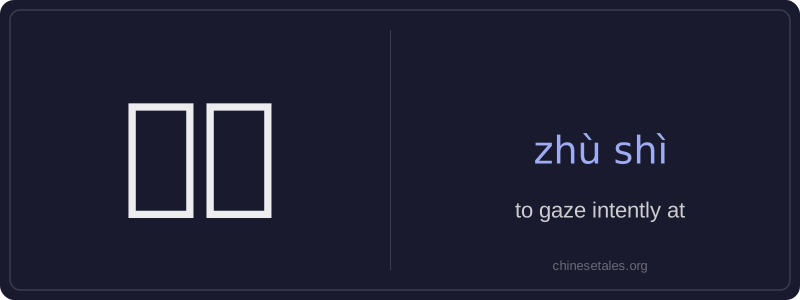
注视 means 'to gaze intently at' — to look steadily and with focused attention, often conveying curiosity, concern, admiration, or concentration. The first character 注 (zhù) means 'to pour' or 'to concentrate', suggesting directed focus; the second character 视 (shì) means 'to look' or 'to see'. Together, they form a compound verb emphasizing sustained, purposeful looking — not just glancing, but observing closely with mental engagement.
This word is commonly used in descriptive writing, psychological contexts, or narratives where attention or emotional intensity matters — for example, when describing someone watching another person during an important moment, studying an object carefully, or reacting to something surprising. It carries a slightly formal or literary tone and appears frequently in novels, films, and news reports, but is also natural in everyday speech when emphasis on attentiveness is needed.
Example Sentences
Related Words
背后
背后 literally means 'back + behind' and functions
不对
不对 (bù duì) literally combines 不 (bù), meani
中学
'Zhōngxué' literally combines 'zhōng' (middle)
见面
见面 literally means 'see face' — combining 见 (t
面条
‘面条’ (miàn tiáo) literally means ‘flour str
我的
我的 (wǒ de) is a possessive pronoun meaning 'my'
后来
Later (hòulái) is an adverb meaning 'afterwards'
认同
‘认同’ (tóng rèn) is a verb meaning ‘to ident