Word Explanation
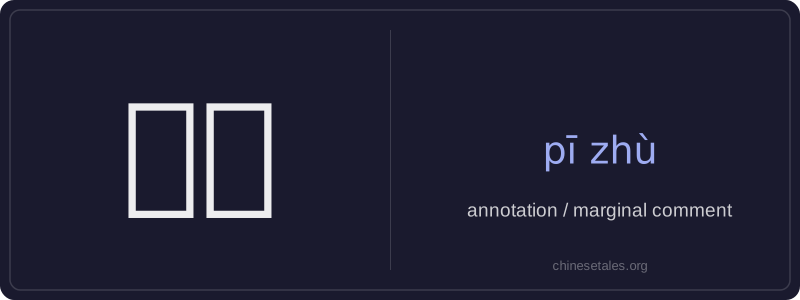
‘批注’ (pī zhù) is a noun meaning ‘annotation’ or ‘marginal comment’—a brief explanatory or evaluative note written in the margin of a text, such as a book, essay, or student assignment. The character 批 (pī) means ‘to criticize’, ‘to review’, or ‘to comment on’, often with authority or scholarly intent; 注 (zhù) means ‘to annotate’, ‘to explain’, or ‘to note down’. Together, 批注 emphasizes a thoughtful, often pedagogical or editorial response to written material—not just passive highlighting, but active engagement through commentary.
This term is especially common in academic, literary, and educational contexts: teachers add 批注 to students’ essays to guide improvement; scholars insert 批注 in classical texts to clarify obscure passages; and editors use them during manuscript revision. Unlike casual notes (笔记), 批注 implies critical insight, contextual interpretation, or constructive feedback. It’s more formal than comments (评论) and more integrated into the text layout than standalone remarks.
Example Sentences
Related Words
国语
‘Guó yǔ’ literally means 'national language'—
面条
‘面条’ (miàn tiáo) literally means ‘flour str
背后
背后 literally means 'back + behind' and functions
认同
‘认同’ (tóng rèn) is a verb meaning ‘to ident
无论谁
‘无论谁’ (wú lùn shéi) is a pronoun meaning
中学
'Zhōngxué' literally combines 'zhōng' (middle)
见面
见面 literally means 'see face' — combining 见 (t
外语
‘外语’ literally means ‘outside language’ —