Word Explanation
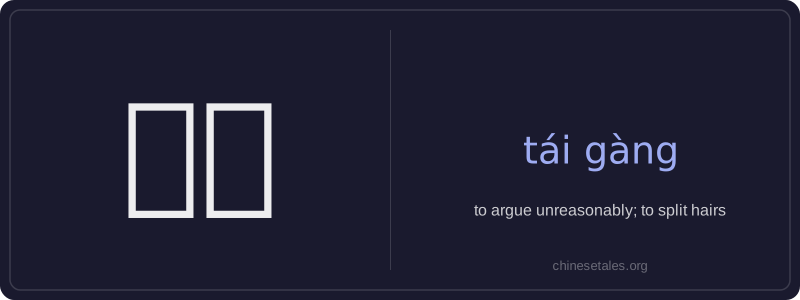
‘抬杠’ (tái gàng) literally means ‘to lift a pole’—a vivid image of two people each grabbing one end of a heavy wooden beam and pushing upward, neither willing to yield. Figuratively, it describes the act of arguing stubbornly or unreasonably, often for the sake of contradiction rather than truth or resolution. The word carries a distinctly negative, colloquial tone: it implies pettiness, defensiveness, or an unwillingness to listen, even when evidence is clear.
This term is commonly used in informal spoken Chinese, especially when describing interpersonal friction—like debates with friends, family disputes, or workplace disagreements where logic takes a back seat to ego. It’s rarely used in formal writing or respectful discourse. While both characters individually have neutral meanings (‘lift’ and ‘pole/beam’), their combination creates a fixed idiom with strong pragmatic weight: the focus is not on the argument’s content but on its uncooperative, adversarial style.
Example Sentences
Related Words
国语
‘Guó yǔ’ literally means 'national language'—
面条
‘面条’ (miàn tiáo) literally means ‘flour str
背后
背后 literally means 'back + behind' and functions
认同
‘认同’ (tóng rèn) is a verb meaning ‘to ident
无论谁
‘无论谁’ (wú lùn shéi) is a pronoun meaning
中学
'Zhōngxué' literally combines 'zhōng' (middle)
见面
见面 literally means 'see face' — combining 见 (t
外语
‘外语’ literally means ‘outside language’ —