Word Explanation
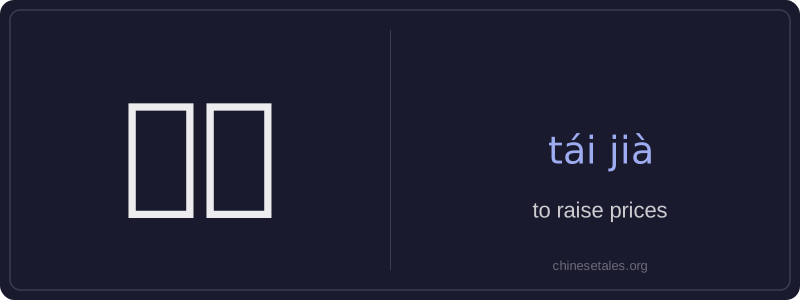
‘抬价’ is a verb meaning 'to raise prices'—typically used when sellers intentionally increase the price of goods or services, often to take advantage of high demand, scarcity, or competitive bidding. The first character 抬 (tái) literally means 'to lift' or 'to raise', suggesting upward movement; the second character 价 (jià) means 'price' or 'value'. Together, they form a compact, action-oriented compound expressing deliberate price inflation. It carries a slightly negative or critical connotation, implying the increase is unjustified, opportunistic, or harmful to buyers.
This term commonly appears in discussions about markets, real estate, auctions, and consumer rights. It’s frequently used in news reports, economic commentary, and everyday complaints about rising costs—especially when price hikes seem unreasonable or coordinated. Unlike neutral terms like ‘涨价’ (zhǎng jià, 'prices rise'), ‘抬价’ implies agency and intent on the part of sellers, making it more evaluative and context-sensitive.
Example Sentences
Related Words
国语
‘Guó yǔ’ literally means 'national language'—
面条
‘面条’ (miàn tiáo) literally means ‘flour str
背后
背后 literally means 'back + behind' and functions
认同
‘认同’ (tóng rèn) is a verb meaning ‘to ident
无论谁
‘无论谁’ (wú lùn shéi) is a pronoun meaning
中学
'Zhōngxué' literally combines 'zhōng' (middle)
见面
见面 literally means 'see face' — combining 见 (t
外语
‘外语’ literally means ‘outside language’ —