Word Explanation
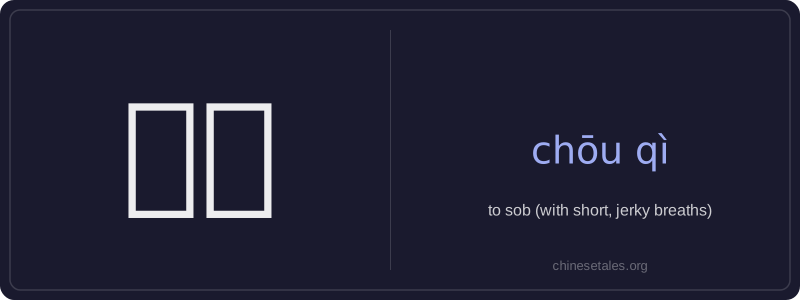
‘抽泣’ describes the physical act of sobbing — short, irregular, often involuntary breaths accompanied by quiet crying, typically due to deep sadness, grief, or overwhelming emotion. The first character 抽 (chōu) means 'to pull' or 'to draw', suggesting a jerky, pulling motion in the chest or throat; the second character 泣 (qì) means 'to weep' or 'to cry'. Together, they evoke the strained, gasping quality of suppressed or uncontrollable tears — not loud wailing, but trembling, hitched breathing that interrupts speech and reveals raw vulnerability.
This verb is commonly used in literary, descriptive, or empathetic contexts — in novels, psychological reports, counseling settings, or everyday observation of someone emotionally overwhelmed. It implies restraint or inability to fully express sorrow aloud, distinguishing it from more explosive forms of crying. While it can describe adults or children, it’s especially frequent when portraying quiet, internalized distress — such as after loss, disappointment, or trauma — and often appears with verbs like ‘发出’ (emit), ‘开始’ (begin), or ‘止不住’ (can’t stop).
Example Sentences
Related Words
国语
‘Guó yǔ’ literally means 'national language'—
面条
‘面条’ (miàn tiáo) literally means ‘flour str
背后
背后 literally means 'back + behind' and functions
认同
‘认同’ (tóng rèn) is a verb meaning ‘to ident
无论谁
‘无论谁’ (wú lùn shéi) is a pronoun meaning
中学
'Zhōngxué' literally combines 'zhōng' (middle)
见面
见面 literally means 'see face' — combining 见 (t
外语
‘外语’ literally means ‘outside language’ —