Word Explanation
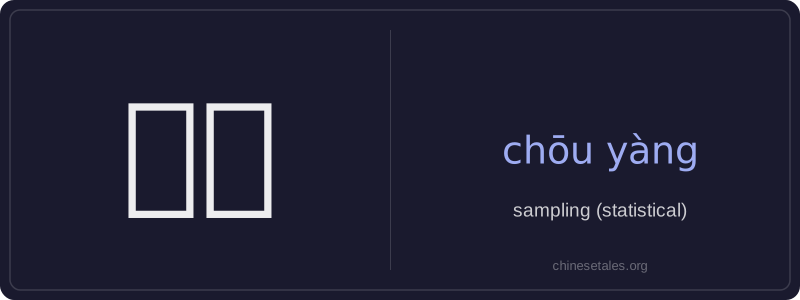
‘抽样’ literally means ‘to draw a sample’ — 抽 (chōu) means ‘to draw, extract, or select’, and 样 (yàng) means ‘sample’ or ‘example’. Together, they form a technical noun meaning ‘sampling’, especially in statistics, research, quality control, or public health. It refers to the process of selecting a subset of individuals or items from a larger population to make inferences about the whole group.
This term is widely used in academic, medical, industrial, and governmental contexts — for instance, when testing food safety, conducting opinion polls, or monitoring disease prevalence. While it can appear in spoken Chinese, it’s more common in formal written reports, scientific papers, and official announcements. Unlike casual terms like ‘随便挑几个’ (just pick a few), 抽样 implies methodological rigor, often following probability-based principles such as random or stratified sampling.
Example Sentences
Related Words
国语
‘Guó yǔ’ literally means 'national language'—
面条
‘面条’ (miàn tiáo) literally means ‘flour str
背后
背后 literally means 'back + behind' and functions
认同
‘认同’ (tóng rèn) is a verb meaning ‘to ident
无论谁
‘无论谁’ (wú lùn shéi) is a pronoun meaning
中学
'Zhōngxué' literally combines 'zhōng' (middle)
见面
见面 literally means 'see face' — combining 见 (t
外语
‘外语’ literally means ‘outside language’ —