Word Explanation
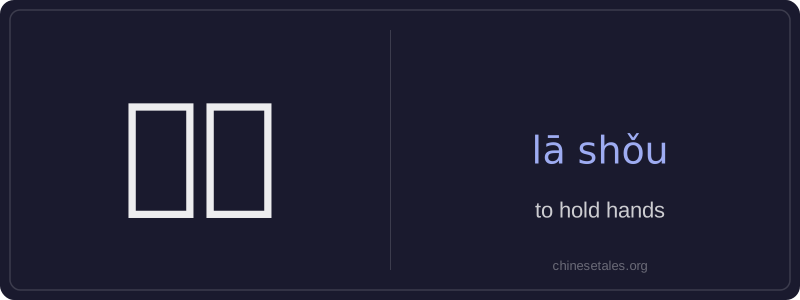
‘拉手’ literally combines ‘拉’ (to pull, to draw) and ‘手’ (hand), forming a verb meaning ‘to hold hands’. It describes the physical act of two or more people grasping each other’s hands, often as a gesture of affection, support, guidance, or unity. Unlike formal or literary expressions, ‘拉手’ is neutral in register and commonly used in everyday spoken and written Chinese — especially in contexts involving children, couples, friends, or caregivers helping others.
The phrase is typically transitive and requires a direct object (e.g., ‘拉他的手’), though the object may be omitted if context makes it clear. It does not imply romantic exclusivity; it can express tenderness between parents and children, solidarity among friends, or simple assistance across age groups. It is rarely used in formal documents or business settings, but appears frequently in stories, dialogues, instructions for young learners, and descriptions of daily interactions.
Example Sentences
Related Words
国语
‘Guó yǔ’ literally means 'national language'—
面条
‘面条’ (miàn tiáo) literally means ‘flour str
背后
背后 literally means 'back + behind' and functions
认同
‘认同’ (tóng rèn) is a verb meaning ‘to ident
无论谁
‘无论谁’ (wú lùn shéi) is a pronoun meaning
中学
'Zhōngxué' literally combines 'zhōng' (middle)
见面
见面 literally means 'see face' — combining 见 (t
外语
‘外语’ literally means ‘outside language’ —