Word Explanation
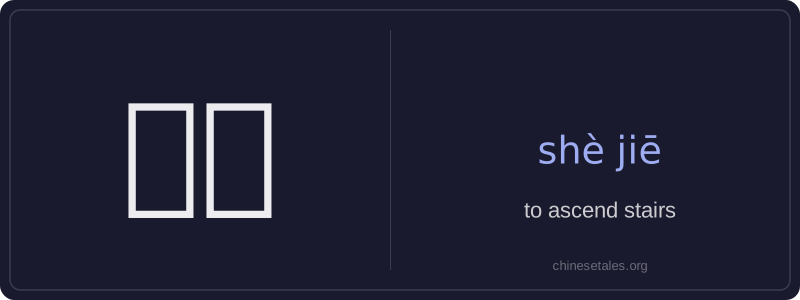
‘拾阶’ (shè jiē) is a literary and elegant verb meaning ‘to ascend stairs step by step’. Though it contains the character 拾, which commonly means ‘to pick up’, here it is a homophone used in its archaic reading shè — meaning ‘to tread’ or ‘to step on’. 阶 means ‘step’ or ‘stair’, so together 拾阶 literally evokes the image of deliberately placing one’s foot on each stair while climbing upward. It conveys grace, calmness, and intentionality — often used in descriptive writing about temples, ancient buildings, mountainside paths, or solemn occasions.
This term appears frequently in classical poetry, travel essays, and formal narration. It is rarely used in casual speech; instead, everyday speakers say 上楼梯 (shàng lóu tī) or 爬楼梯 (pá lóu tī). 拾阶 carries a quiet, dignified tone — suitable for describing someone walking up stone steps at a heritage site or approaching a shrine with reverence.
Example Sentences
Related Words
国语
‘Guó yǔ’ literally means 'national language'—
面条
‘面条’ (miàn tiáo) literally means ‘flour str
背后
背后 literally means 'back + behind' and functions
认同
‘认同’ (tóng rèn) is a verb meaning ‘to ident
无论谁
‘无论谁’ (wú lùn shéi) is a pronoun meaning
中学
'Zhōngxué' literally combines 'zhōng' (middle)
见面
见面 literally means 'see face' — combining 见 (t
外语
‘外语’ literally means ‘outside language’ —