Word Explanation
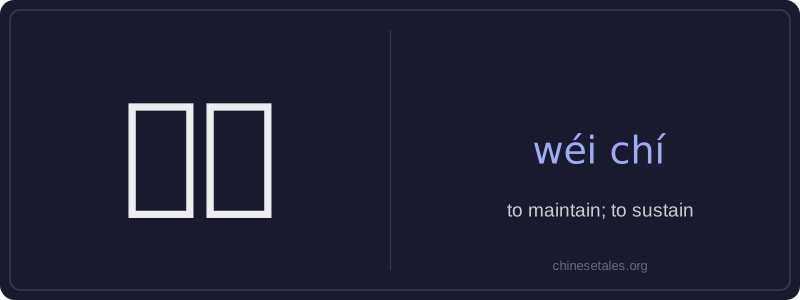
维持 (wéi chí) is a verb meaning 'to maintain' or 'to sustain'—often referring to keeping something in its current state, especially over time. The character 维 (wéi) originally meant 'to tie up' or 'to hold together', and 持 (chí) means 'to hold' or 'to grasp'. Together, they evoke the idea of actively holding something steady, preventing decline or disruption. It’s commonly used with abstract nouns like order, peace, health, relationships, or systems.
This word appears frequently in formal, written, and professional contexts—such as news reports, medical advice, policy documents, and workplace communication. It implies conscious, ongoing effort rather than passive continuity. For example, you might 'maintain health' through diet and exercise, or 'sustain peace' through diplomacy. Unlike the more casual 保持 (bǎochí), 维持 often carries a sense of necessity, responsibility, or structural support—especially when referring to essential conditions or functions.
Example Sentences
Related Words
国语
‘Guó yǔ’ literally means 'national language'—
面条
‘面条’ (miàn tiáo) literally means ‘flour str
背后
背后 literally means 'back + behind' and functions
认同
‘认同’ (tóng rèn) is a verb meaning ‘to ident
无论谁
‘无论谁’ (wú lùn shéi) is a pronoun meaning
中学
'Zhōngxué' literally combines 'zhōng' (middle)
见面
见面 literally means 'see face' — combining 见 (t
外语
‘外语’ literally means ‘outside language’ —