Word Explanation
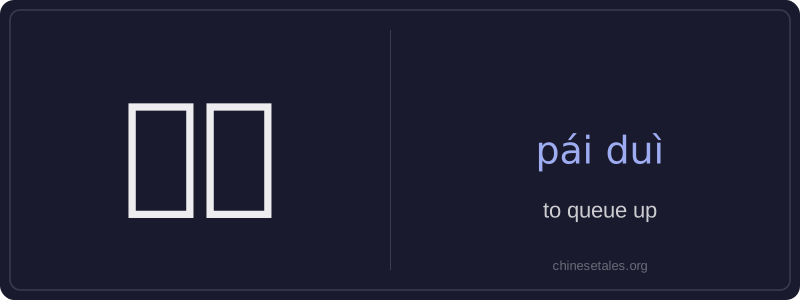
排队 (pái duì) literally means 'to arrange in a line' (排) and 'team/line' (队), together forming the verb 'to queue up' or 'to stand in line.' It describes the action of waiting one’s turn in an orderly sequence—commonly at ticket counters, supermarket checkouts, bus stops, or government service offices. The word emphasizes collective behavior and social norms around fairness and patience.
This verb is frequently used in both formal and informal contexts. It can be used transitively ('queue up for something') or intransitively ('queue up to do something'). While 排队 often implies physical presence, it’s also used metaphorically online (e.g., for virtual waiting rooms). Unlike some verbs, it does not require aspect particles like 了 or 过 unless specifying completion or experience—but adding them is grammatically correct when needed.
Example Sentences
Related Words
国语
‘Guó yǔ’ literally means 'national language'—
面条
‘面条’ (miàn tiáo) literally means ‘flour str
背后
背后 literally means 'back + behind' and functions
认同
‘认同’ (tóng rèn) is a verb meaning ‘to ident
无论谁
‘无论谁’ (wú lùn shéi) is a pronoun meaning
中学
'Zhōngxué' literally combines 'zhōng' (middle)
见面
见面 literally means 'see face' — combining 见 (t
外语
‘外语’ literally means ‘outside language’ —