Word Explanation
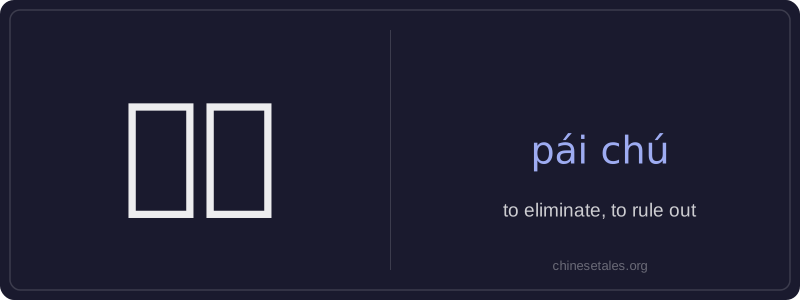
排 means 'to push out' or 'to arrange in order', and 除 means 'to remove' or 'to get rid of'. Together, 排除 literally conveys the idea of 'pushing out and removing' — hence its core meaning: to eliminate, exclude, or rule out something unwanted, incorrect, or irrelevant. It is commonly used in formal, technical, or analytical contexts — especially in medicine, science, engineering, and logic — where one systematically dismisses possibilities or factors.
This verb often appears with objects like doubts (怀疑), causes (原因), risks (风险), or errors (错误). It frequently follows modal verbs like ’t be able to' (无法), 能 (can), or 必须 (must), and pairs with complements like 掉 or 干净 in spoken usage (e.g., 排除掉). Unlike casual synonyms like 去掉, 排除 carries a sense of deliberate, reasoned elimination — not just physical removal but intellectual or diagnostic exclusion.
Example Sentences
Related Words
国语
‘Guó yǔ’ literally means 'national language'—
面条
‘面条’ (miàn tiáo) literally means ‘flour str
背后
背后 literally means 'back + behind' and functions
认同
‘认同’ (tóng rèn) is a verb meaning ‘to ident
无论谁
‘无论谁’ (wú lùn shéi) is a pronoun meaning
中学
'Zhōngxué' literally combines 'zhōng' (middle)
见面
见面 literally means 'see face' — combining 见 (t
外语
‘外语’ literally means ‘outside language’ —