Word Explanation
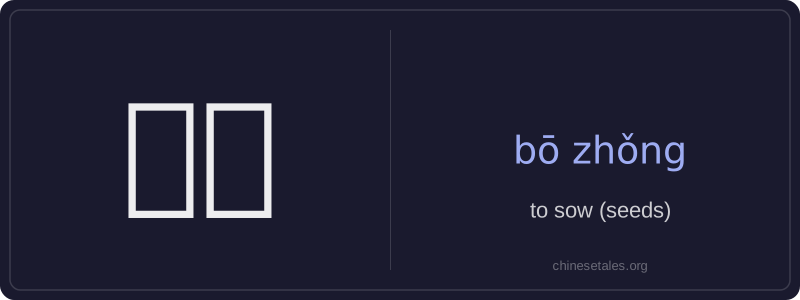
‘播种’ is a verb meaning 'to sow (seeds)' — the act of scattering or planting seeds in soil to begin plant growth. The first character 播 (bō) means 'to spread' or 'to scatter', and the second character 种 (zhǒng) here functions as a noun meaning 'seed'. Together, they form a compound verb emphasizing the intentional distribution of seeds for cultivation. It’s commonly used in agricultural, gardening, and ecological contexts — both literally (e.g., sowing rice or flowers) and figuratively (e.g., 'sowing the seeds of friendship').
The word carries a positive, nurturing connotation and often appears in spring-related activities, farming reports, environmental education, and idiomatic expressions. While it can be used transitively ('播种水稻'), it may also appear without an object when context is clear ('春天到了,农民开始播种'). Unlike general terms like '种植' (to cultivate), 播种 specifically highlights the initial seeding stage — not later care or harvesting.
Example Sentences
Related Words
国语
‘Guó yǔ’ literally means 'national language'—
面条
‘面条’ (miàn tiáo) literally means ‘flour str
背后
背后 literally means 'back + behind' and functions
认同
‘认同’ (tóng rèn) is a verb meaning ‘to ident
无论谁
‘无论谁’ (wú lùn shéi) is a pronoun meaning
中学
'Zhōngxué' literally combines 'zhōng' (middle)
见面
见面 literally means 'see face' — combining 见 (t
外语
‘外语’ literally means ‘outside language’ —