Word Explanation
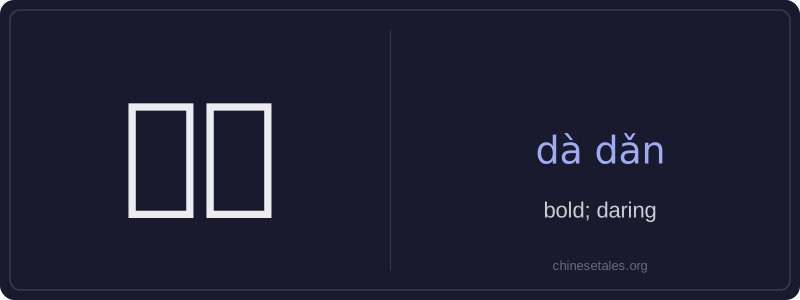
大胆 (dà dǎn) literally combines 大 (dà, 'big') and 胆 (dǎn, 'gallbladder'—a traditional Chinese physiological symbol for courage and nerve). In classical and modern usage, the gallbladder is metaphorically associated with boldness and fearlessness, so 大胆 means having strong courage, confidence, or daring—especially when taking initiative, expressing opinions, or trying something new. It often carries a positive connotation of admirable bravery, though context matters: it can occasionally imply recklessness if tone or situation suggests overstepping boundaries.
This adjective commonly modifies nouns (e.g., 大胆的尝试 'a bold attempt') or functions predicatively (e.g., 他很大胆 'He is very bold'). It’s frequently used in educational, professional, and creative contexts to encourage risk-taking and original thinking. Unlike the noun 胆量 (dǎn liàng, 'courage' as a measurable quality), 大胆 emphasizes an active, outward-facing attitude rather than inner fortitude alone.
Example Sentences
Related Words
国语
‘Guó yǔ’ literally means 'national language'—
面条
‘面条’ (miàn tiáo) literally means ‘flour str
背后
背后 literally means 'back + behind' and functions
认同
‘认同’ (tóng rèn) is a verb meaning ‘to ident
无论谁
‘无论谁’ (wú lùn shéi) is a pronoun meaning
中学
'Zhōngxué' literally combines 'zhōng' (middle)
见面
见面 literally means 'see face' — combining 见 (t
外语
‘外语’ literally means ‘outside language’ —