Word Explanation
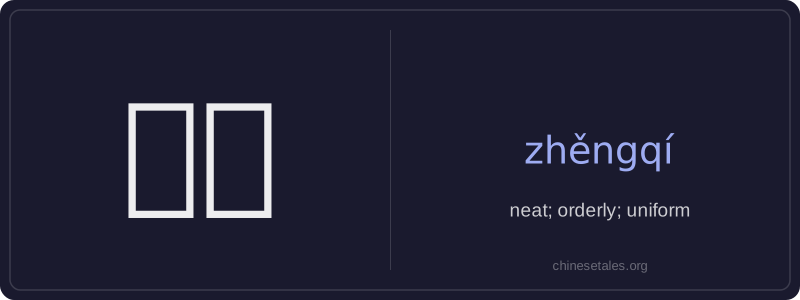
整齐 (zhěngqí) is an adjective meaning 'neat,' 'orderly,' or 'uniform.' It combines 整 (zhěng), which conveys completeness, tidiness, and organization, and 齐 (qí), meaning 'even,' 'aligned,' or 'in unison.' Together, they emphasize visual and structural harmony — things arranged without clutter, inconsistency, or disorder. The word often describes physical arrangements (e.g., books on a shelf, desks in a classroom) but also extends to abstract contexts like behavior, dress code, or data formatting.
It’s commonly used in daily life: teachers praise students for keeping their desks 整齐; office workers are reminded to keep files 整齐; and parents encourage children to fold clothes 整齐. Unlike some adjectives, 整齐 can function directly before nouns (e.g., 整齐的房间) or after 是/很 (e.g., 房间很整齐). It carries a neutral-to-positive connotation, implying care and discipline rather than rigidity.
Example Sentences
Related Words
国语
‘Guó yǔ’ literally means 'national language'—
面条
‘面条’ (miàn tiáo) literally means ‘flour str
背后
背后 literally means 'back + behind' and functions
认同
‘认同’ (tóng rèn) is a verb meaning ‘to ident
无论谁
‘无论谁’ (wú lùn shéi) is a pronoun meaning
中学
'Zhōngxué' literally combines 'zhōng' (middle)
见面
见面 literally means 'see face' — combining 见 (t
外语
‘外语’ literally means ‘outside language’ —