Word Explanation
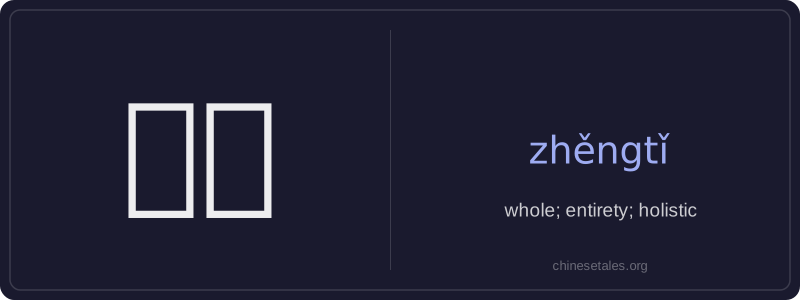
整体 (zhěngtǐ) literally combines 整 (zhěng), meaning 'whole', 'complete', or 'entire', and 体 (tǐ), meaning 'body' or 'entity'. Together, they form a compound meaning 'the whole', 'the entirety', or 'the holistic entity' — emphasizing unity and interdependence rather than isolated parts. It’s commonly used in contexts where one must consider something as a unified system, such as in traditional Chinese medicine (where health is viewed holistically), education, design, or management.
This word functions primarily as a noun ('the whole') but also frequently as an adjective modifying nouns (e.g., 整体规划 — 'comprehensive plan'). It carries a formal, slightly academic register and appears often in written language, official reports, and professional discourse. Unlike colloquial terms like 全部 (quánbù) or 所有 (suǒyǒu), which simply mean 'all', 整体 stresses structural coherence and functional integration — the idea that the parts only make sense within the larger framework.
Example Sentences
Related Words
国语
‘Guó yǔ’ literally means 'national language'—
面条
‘面条’ (miàn tiáo) literally means ‘flour str
背后
背后 literally means 'back + behind' and functions
认同
‘认同’ (tóng rèn) is a verb meaning ‘to ident
无论谁
‘无论谁’ (wú lùn shéi) is a pronoun meaning
中学
'Zhōngxué' literally combines 'zhōng' (middle)
见面
见面 literally means 'see face' — combining 见 (t
外语
‘外语’ literally means ‘outside language’ —