Word Explanation
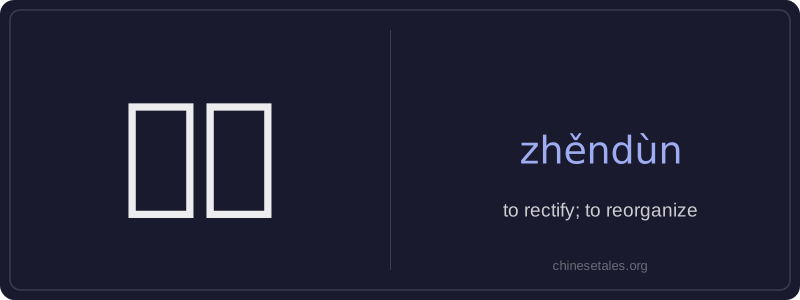
整顿 (zhěndùn) is a formal verb meaning 'to rectify', 'to reorganize', or 'to bring order to a disordered situation'. It combines 整 (zhěn), which conveys 'to tidy up', 'to arrange', or 'to standardize', and 顿 (dùn), which here reinforces the sense of 'setting things right' or 'establishing proper order' — not to be confused with its more common meaning 'to pause' or 'a meal'. Together, they emphasize systematic correction and restructuring.
This word is frequently used in official, administrative, or institutional contexts — for example, when governments launch campaigns to improve market regulation, schools revise disciplinary policies, or hospitals upgrade safety protocols. It implies authority, intentionality, and measurable outcomes, often involving inspection, enforcement, and follow-up. While it can describe physical cleanup, its core nuance is structural reform rather than simple tidying.
Example Sentences
Related Words
国语
‘Guó yǔ’ literally means 'national language'—
面条
‘面条’ (miàn tiáo) literally means ‘flour str
背后
背后 literally means 'back + behind' and functions
认同
‘认同’ (tóng rèn) is a verb meaning ‘to ident
无论谁
‘无论谁’ (wú lùn shéi) is a pronoun meaning
中学
'Zhōngxué' literally combines 'zhōng' (middle)
见面
见面 literally means 'see face' — combining 见 (t
外语
‘外语’ literally means ‘outside language’ —