Word Explanation
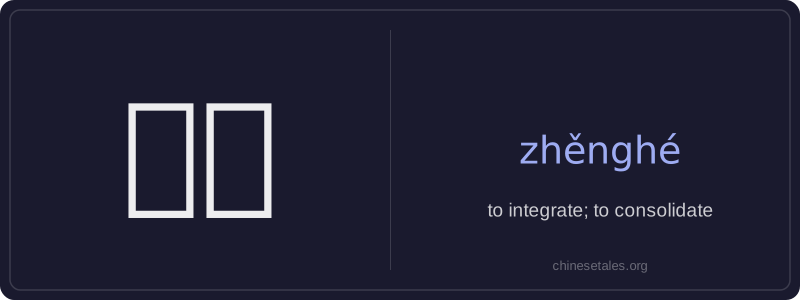
整合 (zhěnghé) is a verb meaning 'to integrate' or 'to consolidate'—bringing separate elements together into a unified, coherent whole. The first character 整 (zhěng) means 'to arrange', 'to tidy up', or 'to make whole', while 合 (hé) means 'to join', 'to unite', or 'to combine'. Together, they emphasize purposeful coordination and structural unification—not just mixing, but organizing diverse parts so they function as one system.
This word is commonly used in formal, professional, or technical contexts: education reform, healthcare systems, business strategy, or digital platform development. It often appears with objects like resources, data, departments, or services. While it can describe physical merging, it’s more frequently abstract—referring to conceptual, procedural, or organizational integration. It carries a positive, proactive connotation, implying efficiency, synergy, and improved functionality through deliberate unification.
Example Sentences
Related Words
国语
‘Guó yǔ’ literally means 'national language'—
面条
‘面条’ (miàn tiáo) literally means ‘flour str
背后
背后 literally means 'back + behind' and functions
认同
‘认同’ (tóng rèn) is a verb meaning ‘to ident
无论谁
‘无论谁’ (wú lùn shéi) is a pronoun meaning
中学
'Zhōngxué' literally combines 'zhōng' (middle)
见面
见面 literally means 'see face' — combining 见 (t
外语
‘外语’ literally means ‘outside language’ —