Word Explanation
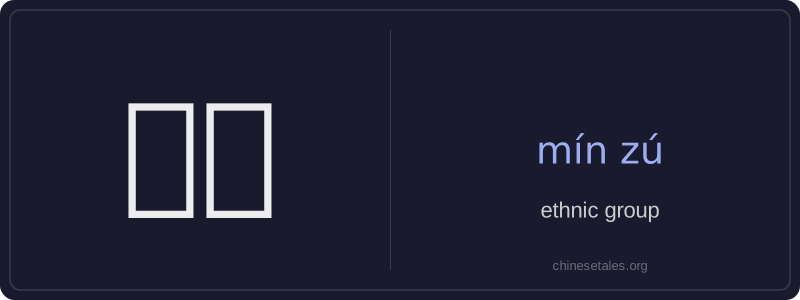
‘民族’ (mín zú) literally combines ‘民’ (mín), meaning ‘people’ or ‘the populace’, and ‘族’ (zú), meaning ‘clan’, ‘tribe’, or ‘family lineage’. Together, they form the standard term for ‘ethnic group’—a large social group sharing common ancestry, language, culture, history, or territory. In China, it specifically refers to one of the 56 officially recognized ethnic groups, including the Han majority and minorities such as the Uyghur, Tibetan, Mongol, and Zhuang.
The word is formal and neutral, used in academic, governmental, and media contexts. It emphasizes shared cultural identity rather than nationality or citizenship; thus, a Chinese citizen may belong to the Han ethnic group, while another may be ethnically Tibetan but also a Chinese national. ‘民族’ appears frequently in discussions of cultural heritage, minority policies, festivals, and linguistic diversity—never used for animals, plants, or abstract concepts like emotions.
Example Sentences
Related Words
国语
‘Guó yǔ’ literally means 'national language'—
面条
‘面条’ (miàn tiáo) literally means ‘flour str
背后
背后 literally means 'back + behind' and functions
认同
‘认同’ (tóng rèn) is a verb meaning ‘to ident
无论谁
‘无论谁’ (wú lùn shéi) is a pronoun meaning
中学
'Zhōngxué' literally combines 'zhōng' (middle)
见面
见面 literally means 'see face' — combining 见 (t
外语
‘外语’ literally means ‘outside language’ —