Word Explanation
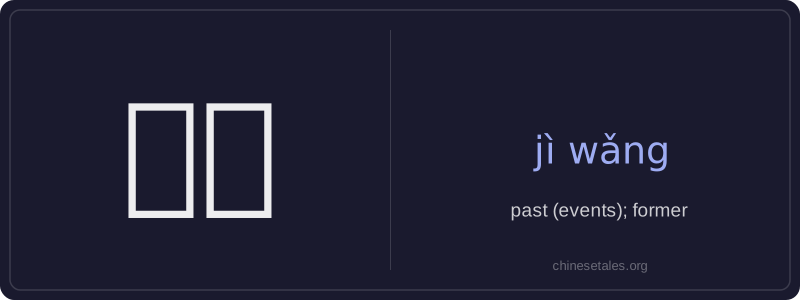
‘既往’ literally combines ‘既’ (jì), meaning ‘already’ or ‘since’, and ‘往’ (wǎng), meaning ‘past’ or ‘gone’. Together, they form a formal noun meaning ‘the past’—especially referring to past events, experiences, or conditions. It is commonly used in contexts involving history, personal background, or medical records, where it emphasizes what has already occurred and is now settled.
This term carries a slightly literary or official tone and appears frequently in written Chinese—such as in medical reports (e.g., ‘既往病史’), legal documents, or academic writing—but is rarely used in casual speech. Unlike the more neutral ‘以前’ or ‘过去’, ‘既往’ often implies continuity or relevance of past matters to the present situation, especially when assessing consequences, patterns, or accumulated experience.
Example Sentences
Related Words
国语
‘Guó yǔ’ literally means 'national language'—
面条
‘面条’ (miàn tiáo) literally means ‘flour str
背后
背后 literally means 'back + behind' and functions
认同
‘认同’ (tóng rèn) is a verb meaning ‘to ident
无论谁
‘无论谁’ (wú lùn shéi) is a pronoun meaning
中学
'Zhōngxué' literally combines 'zhōng' (middle)
见面
见面 literally means 'see face' — combining 见 (t
外语
‘外语’ literally means ‘outside language’ —