Word Explanation
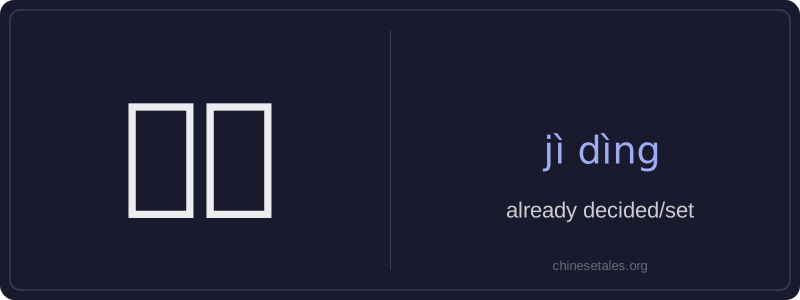
‘既定’ is an adjective meaning ‘already decided,’ ‘pre-established,’ or ‘set in advance.’ It combines two characters: 既 (jì), which conveys the sense of ‘already’ or ‘by now,’ and 定 (dìng), meaning ‘to decide,’ ‘to fix,’ or ‘to settle.’ Together, they emphasize that something has been firmly determined prior to the current moment—often implying formality, authority, or inevitability. The word carries a slightly formal or written tone and is common in official announcements, policy documents, schedules, and planning contexts.
It typically modifies nouns like 方案 (plan), 目标 (goal), 日程 (schedule), or 政策 (policy), and often appears with words such as ‘方针’ (guideline) or ‘路线’ (line/path). Unlike colloquial alternatives like ‘早就定好的,’ 既定 sounds objective and impersonal, suggesting the decision was made through due process—not just casually agreed upon. It’s rarely used in casual speech or emotional expressions.
Example Sentences
Related Words
国语
‘Guó yǔ’ literally means 'national language'—
面条
‘面条’ (miàn tiáo) literally means ‘flour str
背后
背后 literally means 'back + behind' and functions
认同
‘认同’ (tóng rèn) is a verb meaning ‘to ident
无论谁
‘无论谁’ (wú lùn shéi) is a pronoun meaning
中学
'Zhōngxué' literally combines 'zhōng' (middle)
见面
见面 literally means 'see face' — combining 见 (t
外语
‘外语’ literally means ‘outside language’ —