Word Explanation
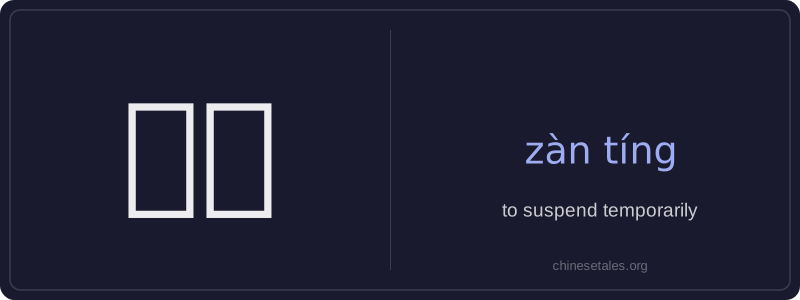
暂停 (zàn tíng) is a verb meaning 'to suspend temporarily' or 'to pause'. It combines two characters: 暂 (zàn), meaning 'for the time being' or 'temporarily', and 停 (tíng), meaning 'to stop' or 'to halt'. Together, they emphasize a brief, intentional interruption—not a permanent end. The word implies that the activity will resume later, often after a short break or due to an external need.
This term is widely used in daily life: pausing a video or music player, halting a meeting for clarification, suspending a process at work, or even asking someone to briefly stop speaking. It carries a neutral-to-formal tone and is common in both spoken and written Chinese—especially in digital interfaces (e.g., '暂停键'), instructions, and professional communication. Unlike the more casual 休息 (xiūxi), which means 'to rest', 暂停 specifically signals a controlled, momentary stop of an ongoing action.
Example Sentences
Related Words
国语
‘Guó yǔ’ literally means 'national language'—
面条
‘面条’ (miàn tiáo) literally means ‘flour str
背后
背后 literally means 'back + behind' and functions
认同
‘认同’ (tóng rèn) is a verb meaning ‘to ident
无论谁
‘无论谁’ (wú lùn shéi) is a pronoun meaning
中学
'Zhōngxué' literally combines 'zhōng' (middle)
见面
见面 literally means 'see face' — combining 见 (t
外语
‘外语’ literally means ‘outside language’ —