Word Explanation
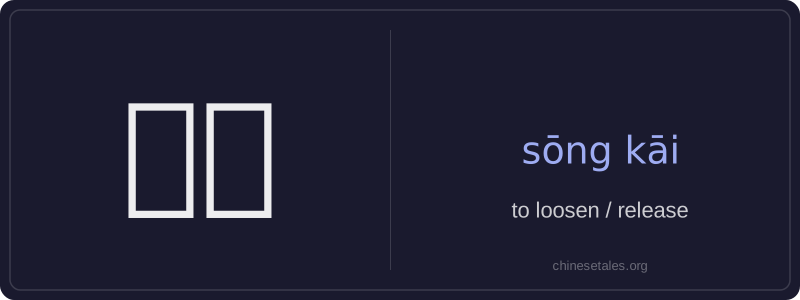
松开 is a compound verb meaning 'to loosen' or 'to release' — literally combining 松 (sōng, 'loose' or 'relaxed') and 开 (kāi, 'open' or 'separate'). Together, they convey the action of undoing tension, unfastening something secured, or letting go of physical pressure. It’s commonly used with objects that are tied, gripped, held, or clamped — like ropes, buttons, handles, or even a person’s grip on something.
This verb is neutral in register and appears frequently in daily life: instructions (e.g., '松开安全带'), descriptions of physical actions ('他松开了拳头'), or even metaphorical contexts ('松开对孩子的控制'). It often takes a direct object (e.g., 松开绳子) and may be followed by aspect particles like 了 or 过. Unlike some similar verbs, 松开 emphasizes the transition from a tightened or held state to a relaxed or separated one — not merely 'opening' or 'removing'.
Example Sentences
Related Words
国语
‘Guó yǔ’ literally means 'national language'—
面条
‘面条’ (miàn tiáo) literally means ‘flour str
背后
背后 literally means 'back + behind' and functions
认同
‘认同’ (tóng rèn) is a verb meaning ‘to ident
无论谁
‘无论谁’ (wú lùn shéi) is a pronoun meaning
中学
'Zhōngxué' literally combines 'zhōng' (middle)
见面
见面 literally means 'see face' — combining 见 (t
外语
‘外语’ literally means ‘outside language’ —