Word Explanation
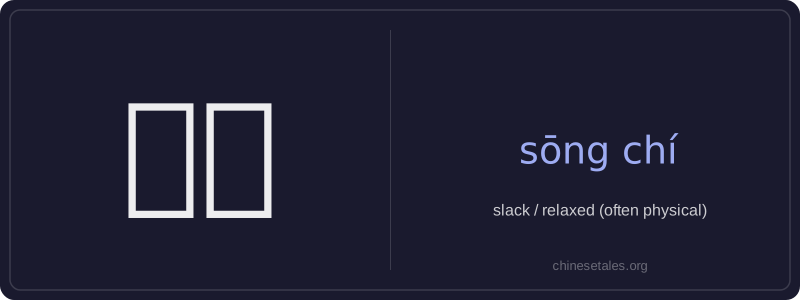
松弛 (sōng chí) is an adjective meaning 'slack', 'loose', or 'relaxed', especially describing a physical state where tension, tightness, or rigidity has decreased. The character 松 (sōng) means 'loose', 'relaxed', or 'unfastened', while 弛 (chí) means 'to relax', 'to slacken', or 'to ease'. Together, they form a compound emphasizing the release of physical tension—commonly used for muscles, skin, ligaments, or mechanical parts. It often appears in medical, fitness, and wellness contexts, such as describing muscle relaxation after exercise or age-related loss of skin elasticity.
Unlike general terms like 放松 (fàngsōng), which refers to mental or intentional relaxation, 松弛 focuses on a passive, observable physical condition—often neutral or slightly negative when implying weakness or decline (e.g., 'sagging' skin or 'loose' joints). It rarely describes emotions or abstract states, and is not used for people’s demeanor in social situations (use 轻松 or 自然 instead).
Example Sentences
Related Words
国语
‘Guó yǔ’ literally means 'national language'—
面条
‘面条’ (miàn tiáo) literally means ‘flour str
背后
背后 literally means 'back + behind' and functions
认同
‘认同’ (tóng rèn) is a verb meaning ‘to ident
无论谁
‘无论谁’ (wú lùn shéi) is a pronoun meaning
中学
'Zhōngxué' literally combines 'zhōng' (middle)
见面
见面 literally means 'see face' — combining 见 (t
外语
‘外语’ literally means ‘outside language’ —