Word Explanation
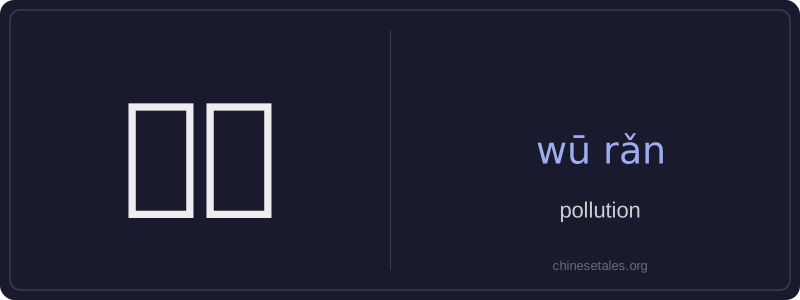
污染 (wū rǎn) literally combines 污 (wū), meaning 'dirty' or 'filthy', and 染 (rǎn), meaning 'to stain' or 'to contaminate'. Together, they form the noun 'pollution' — the introduction of harmful substances or energy into the environment, degrading air, water, soil, or living systems. It is a neutral, formal term widely used in scientific, governmental, and media contexts.
The word commonly appears in compound nouns like 空气污染 (kōngqì wūrǎn, 'air pollution'), 水污染 (shuǐ wūrǎn, 'water pollution'), and 光污染 (guāng wūrǎn, 'light pollution'). It can also function as the object of verbs like 造成 (zàochéng, 'to cause'), 防止 (fángzhǐ, 'to prevent'), or 加剧 (jiājù, 'to worsen'). While it refers to environmental harm, it’s rarely used metaphorically (unlike English 'pollution' in phrases like 'pollution of ideas').
Example Sentences
Related Words
国语
‘Guó yǔ’ literally means 'national language'—
面条
‘面条’ (miàn tiáo) literally means ‘flour str
背后
背后 literally means 'back + behind' and functions
认同
‘认同’ (tóng rèn) is a verb meaning ‘to ident
无论谁
‘无论谁’ (wú lùn shéi) is a pronoun meaning
中学
'Zhōngxué' literally combines 'zhōng' (middle)
见面
见面 literally means 'see face' — combining 见 (t
外语
‘外语’ literally means ‘outside language’ —