Word Explanation
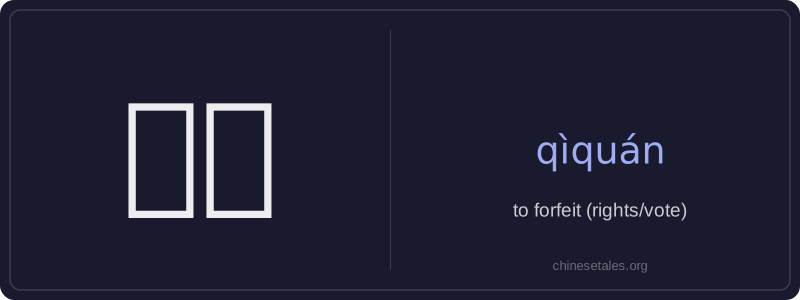
‘弃权’ literally means ‘to abandon rights’ — ‘弃’ (qì) means ‘to discard, renounce’, and ‘权’ (quán) means ‘right, authority, or vote’. Together, the compound expresses the formal act of voluntarily giving up a right, privilege, or opportunity to participate — most commonly in decision-making contexts like voting, legal proceedings, or competitive settings. It carries a neutral-to-formal register and implies conscious, deliberate non-participation rather than mere absence or ignorance.
The term is frequently used in meetings, elections, court hearings, sports competitions, and academic evaluations. Unlike casual phrases like ‘不参加’ (not attending), ‘弃权’ emphasizes the legal or procedural significance of the choice: one formally declines to exercise an existing right. It is often paired with nouns like ‘投票权’ (voting right), ‘上诉权’ (right of appeal), or ‘参赛权’ (right to compete), and appears in written rules, official minutes, and formal announcements.
Example Sentences
Related Words
国语
‘Guó yǔ’ literally means 'national language'—
面条
‘面条’ (miàn tiáo) literally means ‘flour str
背后
背后 literally means 'back + behind' and functions
认同
‘认同’ (tóng rèn) is a verb meaning ‘to ident
无论谁
‘无论谁’ (wú lùn shéi) is a pronoun meaning
中学
'Zhōngxué' literally combines 'zhōng' (middle)
见面
见面 literally means 'see face' — combining 见 (t
外语
‘外语’ literally means ‘outside language’ —