Word Explanation
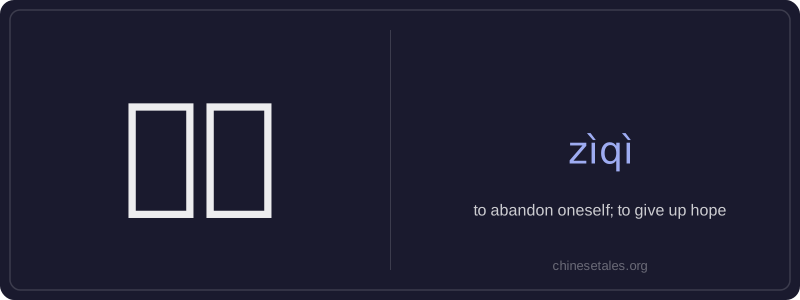
自弃 is a compound verb meaning 'to abandon oneself' or 'to give up hope in one’s own future or potential.' The first character 自 (zì) means 'self,' and the second character 弃 (qì) means 'to discard, abandon, or forsake.' Together, they express a deep psychological state—not just passive resignation, but an active internal rejection of one’s worth, effort, or possibility of change. It often implies moral or spiritual decline, and appears frequently in classical and modern literary, philosophical, or motivational contexts.
This term carries strong negative connotations and is rarely used lightly. It suggests more than ordinary discouragement; it reflects a loss of agency and self-respect. While similar to 'despair' or 'hopelessness,' 自弃 emphasizes personal responsibility—the subject chooses (or allows) their own abandonment. It's commonly found in advice against surrendering to hardship, in discussions about mental resilience, or in critiques of apathy and self-neglect.
Example Sentences
Related Words
国语
‘Guó yǔ’ literally means 'national language'—
面条
‘面条’ (miàn tiáo) literally means ‘flour str
背后
背后 literally means 'back + behind' and functions
认同
‘认同’ (tóng rèn) is a verb meaning ‘to ident
无论谁
‘无论谁’ (wú lùn shéi) is a pronoun meaning
中学
'Zhōngxué' literally combines 'zhōng' (middle)
见面
见面 literally means 'see face' — combining 见 (t
外语
‘外语’ literally means ‘outside language’ —