Word Explanation
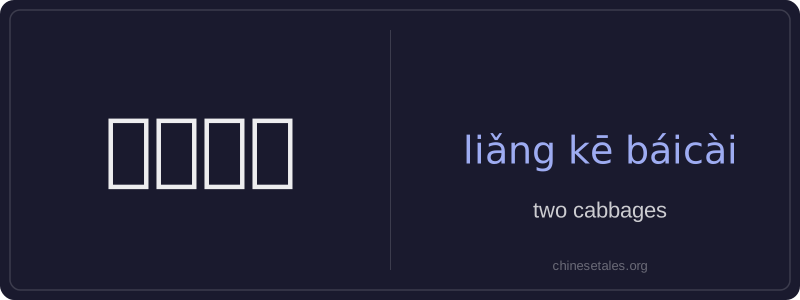
'Liǎng kē báicài' literally means 'two [classifier] cabbages.' It is a count noun phrase composed of the numeral 两 (liǎng, 'two'), the measure word 棵 (kē, used for plants with stems and roots, especially trees, shrubs, and leafy vegetables like cabbage), and the noun 白菜 (báicài, 'Chinese cabbage' or 'napa cabbage'). Unlike English, Chinese requires a classifier between numerals and nouns, and 棵 is chosen here because cabbage grows as an individual plant with a visible stem and root system — not as loose leaves or a head counted with 个 (gè). This phrase refers specifically to two whole, intact cabbage plants or heads, commonly seen in markets, gardens, or cooking contexts.
The term is neutral in register and widely used in daily speech, recipes, and shopping lists. While 白菜 can sometimes refer broadly to leafy greens in regional usage, in standard Mandarin it denotes napa cabbage — a mild, oblong, pale green vegetable with crinkled leaves. The classifier 棵 emphasizes the plant’s living, rooted nature, distinguishing it from processed or cut forms (e.g., 'two pieces of cabbage' would use 块, kuài).
Example Sentences
Related Words
国语
‘Guó yǔ’ literally means 'national language'—
面条
‘面条’ (miàn tiáo) literally means ‘flour str
背后
背后 literally means 'back + behind' and functions
认同
‘认同’ (tóng rèn) is a verb meaning ‘to ident
无论谁
‘无论谁’ (wú lùn shéi) is a pronoun meaning
中学
'Zhōngxué' literally combines 'zhōng' (middle)
见面
见面 literally means 'see face' — combining 见 (t
外语
‘外语’ literally means ‘outside language’ —