Word Explanation
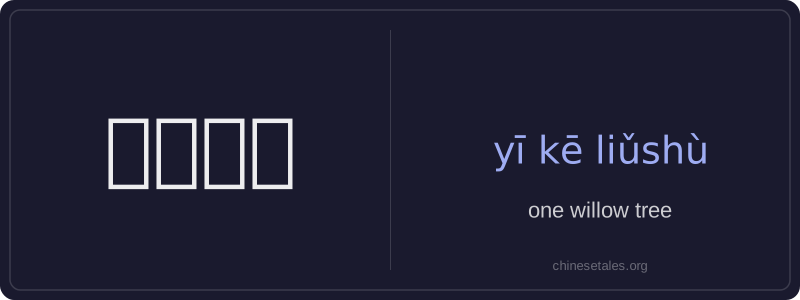
'一棵柳树' literally means 'one willow tree' and functions as a noun phrase. It combines the numeral 一 (yī, 'one'), the measure word 棵 (kē, used for trees and shrubs), and the compound noun 柳树 (liǔshù, 'willow tree'). The character 柳 refers specifically to willow plants — known for their slender, drooping branches — while 树 means 'tree'. Together, they denote a single individual willow tree, emphasizing countability and botanical identity.
This phrase is commonly used in descriptive, poetic, or observational contexts — such as nature writing, landscape painting captions, or elementary science lessons. Unlike generic terms like 'a tree', '一棵柳树' carries cultural resonance in Chinese literature and art, where willows symbolize grace, resilience, and springtime renewal. It’s also frequently encountered in environmental education and gardening discussions, especially when identifying or counting specific tree species.
Example Sentences
Related Words
国语
‘Guó yǔ’ literally means 'national language'—
面条
‘面条’ (miàn tiáo) literally means ‘flour str
背后
背后 literally means 'back + behind' and functions
认同
‘认同’ (tóng rèn) is a verb meaning ‘to ident
无论谁
‘无论谁’ (wú lùn shéi) is a pronoun meaning
中学
'Zhōngxué' literally combines 'zhōng' (middle)
见面
见面 literally means 'see face' — combining 见 (t
外语
‘外语’ literally means ‘outside language’ —