Word Explanation
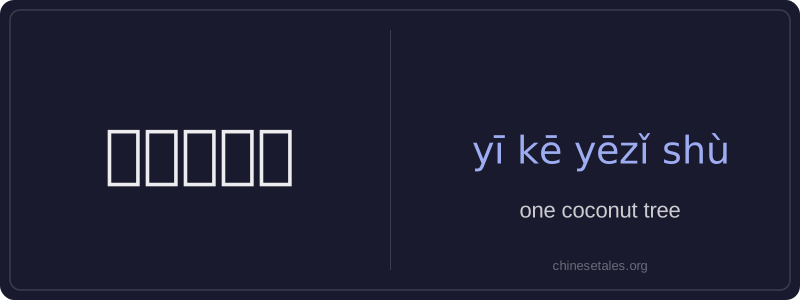
'一棵椰子树' literally means 'one coconut tree' and functions as a noun phrase specifying a single coconut palm. The measure word '棵' (kē) is used specifically for trees, shrubs, and other upright, rooted plants — it cannot be replaced by generic measure words like '个'. '椰子' (yēzǐ) means 'coconut', where '椰' refers to the coconut palm and '子' is a common noun suffix meaning 'seed' or 'fruit'; together they form a compound meaning 'coconut'. '树' (shù) means 'tree', completing the compound to specify the whole plant. This phrase is commonly used in descriptions of tropical landscapes, agricultural contexts, or environmental education.
Unlike English, Chinese requires a classifier ('棵') when counting trees, so you must say '一棵椰子树', never '一个椰子树' (which is grammatically incorrect). The phrase often appears in travel writing, botany lessons, or everyday conversation about gardens, islands, or vacation photos — always emphasizing the physical, living tree rather than just the fruit.
Example Sentences
Related Words
国语
‘Guó yǔ’ literally means 'national language'—
面条
‘面条’ (miàn tiáo) literally means ‘flour str
背后
背后 literally means 'back + behind' and functions
认同
‘认同’ (tóng rèn) is a verb meaning ‘to ident
无论谁
‘无论谁’ (wú lùn shéi) is a pronoun meaning
中学
'Zhōngxué' literally combines 'zhōng' (middle)
见面
见面 literally means 'see face' — combining 见 (t
外语
‘外语’ literally means ‘outside language’ —