Word Explanation
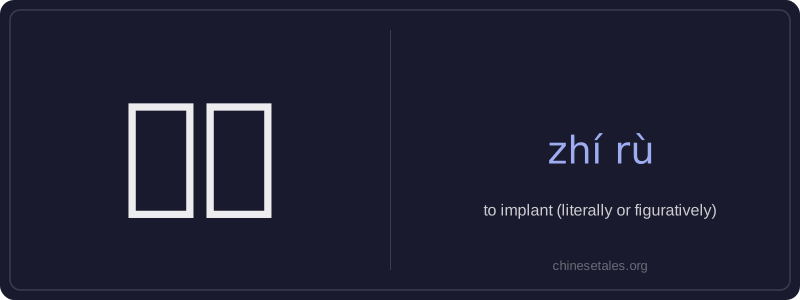
‘植入’ (zhí rù) is a verb meaning 'to implant' — literally placing something inside a living body (e.g., a medical device or tissue), or figuratively embedding an idea, value, or habit into a person’s mind or culture. The first character 植 (zhí) means 'to plant' or 'to establish', evoking growth and rooting; the second character 入 (rù) means 'to enter' or 'to go into'. Together, they convey the sense of deliberately placing something *into* a system where it takes hold and becomes integrated.
This word is commonly used in medical contexts (e.g., pacemaker or dental implant surgery), psychology (implanting beliefs), education (implanting core values), and media studies (implanting stereotypes). It carries a formal, slightly technical tone and implies intentionality and lasting effect — unlike casual synonyms like 'introduce' or 'teach'. While it can be used metaphorically, its literal biological/medical sense remains dominant in everyday usage.
Example Sentences
Related Words
国语
‘Guó yǔ’ literally means 'national language'—
面条
‘面条’ (miàn tiáo) literally means ‘flour str
背后
背后 literally means 'back + behind' and functions
认同
‘认同’ (tóng rèn) is a verb meaning ‘to ident
无论谁
‘无论谁’ (wú lùn shéi) is a pronoun meaning
中学
'Zhōngxué' literally combines 'zhōng' (middle)
见面
见面 literally means 'see face' — combining 见 (t
外语
‘外语’ literally means ‘outside language’ —