Word Explanation
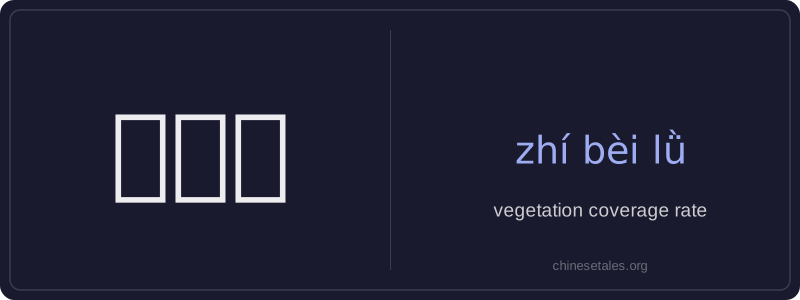
Vegetation coverage rate (zhí bèi lǜ) is a scientific term used in ecology, geography, and environmental science to describe the percentage of land surface covered by living vegetation—such as trees, shrubs, grasses, or crops—as seen from above. It’s calculated by dividing the total area occupied by plant canopies by the total land area under study, then multiplying by 100. The character 植 means 'to plant' or 'vegetation', 被 refers here to 'coverage' or 'blanketing' (not the common meaning 'to be'), and 率 means 'rate' or 'ratio'. Together, they form a precise technical noun indicating how densely plants occupy a given area.
This metric is vital for monitoring ecosystem health, soil erosion risk, climate change impacts, and land-use planning. It’s commonly reported in government environmental reports, satellite imagery analyses, and ecological restoration projects. Unlike general terms like 'greenery', 植被率 carries quantitative, measurable connotations and appears almost exclusively in formal, data-driven contexts—not in casual speech or daily conversation.
Example Sentences
Related Words
国语
‘Guó yǔ’ literally means 'national language'—
面条
‘面条’ (miàn tiáo) literally means ‘flour str
背后
背后 literally means 'back + behind' and functions
认同
‘认同’ (tóng rèn) is a verb meaning ‘to ident
无论谁
‘无论谁’ (wú lùn shéi) is a pronoun meaning
中学
'Zhōngxué' literally combines 'zhōng' (middle)
见面
见面 literally means 'see face' — combining 见 (t
外语
‘外语’ literally means ‘outside language’ —