Word Explanation
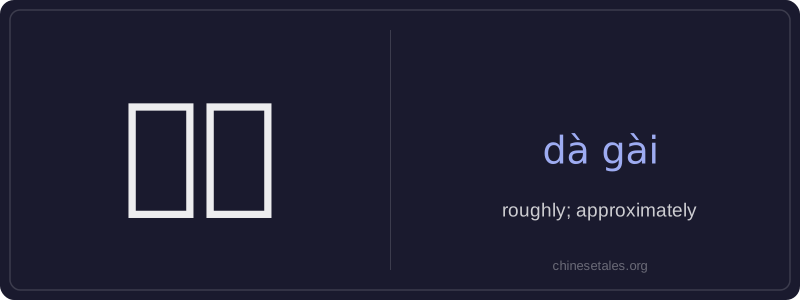
大概 (dà gài) is an adverb meaning 'roughly', 'approximately', or 'more or less'. It expresses estimation or uncertainty about quantity, time, degree, or probability — never exact precision. The character 大 means 'big' or 'large', and 概 means 'general idea' or 'outline'; together, they convey the sense of a broad, inclusive approximation rather than a detailed calculation.
This word is commonly used in everyday speech and writing when giving round numbers, vague timeframes, or tentative conclusions — for example, estimating how long something takes, how many people attended, or how likely something is. It often appears before verbs, adjectives, or numerals, and may soften statements to sound more polite or cautious. Unlike precise quantifiers like 确切地 (quèqiè de), 大概 signals intentional imprecision, making it useful for hedging claims or avoiding overcommitment.
Example Sentences
Related Words
国语
‘Guó yǔ’ literally means 'national language'—
面条
‘面条’ (miàn tiáo) literally means ‘flour str
背后
背后 literally means 'back + behind' and functions
认同
‘认同’ (tóng rèn) is a verb meaning ‘to ident
无论谁
‘无论谁’ (wú lùn shéi) is a pronoun meaning
中学
'Zhōngxué' literally combines 'zhōng' (middle)
见面
见面 literally means 'see face' — combining 见 (t
外语
‘外语’ literally means ‘outside language’ —