Word Explanation
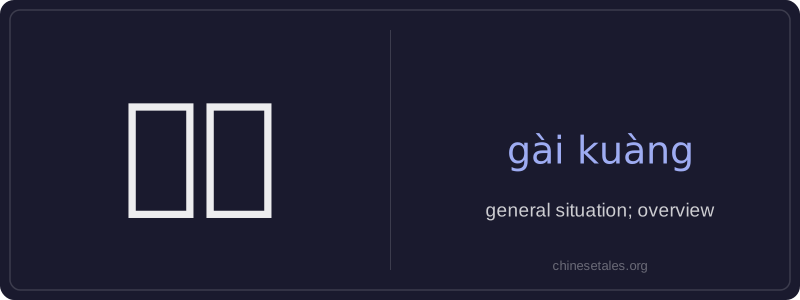
概况 (gài kuàng) is a formal noun meaning 'general situation' or 'overview'. It combines 概 (gài), meaning 'general' or 'rough', and 况 (kuàng), meaning 'condition' or 'circumstance' — together they convey a concise, high-level summary of a place, event, system, or topic. The word emphasizes breadth over detail and is commonly used in reports, introductions, news articles, and official documents.
You’ll often see 概况 after a noun indicating the subject being summarized — for example, 北京概况 (Běijīng gài kuàng) means 'an overview of Beijing'. It rarely stands alone without context and is typically preceded by a determiner like 这个 (zhège, 'this') or followed by 的 (de) to modify another noun (e.g., 城市概况报告, 'a city overview report'). While neutral in tone, it carries a slightly academic or administrative register, making it less common in casual speech than simpler alternatives like 简介 (jiǎnjiè, 'introduction').
Example Sentences
Related Words
国语
‘Guó yǔ’ literally means 'national language'—
面条
‘面条’ (miàn tiáo) literally means ‘flour str
背后
背后 literally means 'back + behind' and functions
认同
‘认同’ (tóng rèn) is a verb meaning ‘to ident
无论谁
‘无论谁’ (wú lùn shéi) is a pronoun meaning
中学
'Zhōngxué' literally combines 'zhōng' (middle)
见面
见面 literally means 'see face' — combining 见 (t
外语
‘外语’ literally means ‘outside language’ —