Word Explanation
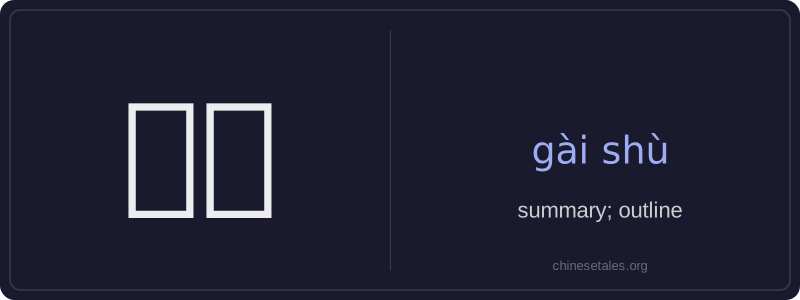
概述 (gài shù) is a noun meaning 'summary' or 'outline'—a concise presentation of the main points of something longer or more complex. The first character 概 (gài) means 'general' or 'roughly', suggesting breadth and abstraction, while 述 (shù) means 'to state' or 'to narrate'. Together, they convey the idea of giving a broad, organized account without detailed elaboration. It’s commonly used in academic, professional, and formal contexts—such as summarizing a report, introducing a chapter, or previewing a presentation.
This word carries a formal register and is rarely used in casual speech; native speakers tend to say 简介 (jiǎnjiè, 'introduction') or 小结 (xiǎojié, 'brief conclusion') in everyday situations. 概述 often appears as a noun (e.g., 一份概述) or as part of compound nouns like 概述部分 (gài shù bù fèn, 'summary section'). It emphasizes clarity, concision, and structural overview rather than interpretation or evaluation.
Example Sentences
Related Words
国语
‘Guó yǔ’ literally means 'national language'—
面条
‘面条’ (miàn tiáo) literally means ‘flour str
背后
背后 literally means 'back + behind' and functions
认同
‘认同’ (tóng rèn) is a verb meaning ‘to ident
无论谁
‘无论谁’ (wú lùn shéi) is a pronoun meaning
中学
'Zhōngxué' literally combines 'zhōng' (middle)
见面
见面 literally means 'see face' — combining 见 (t
外语
‘外语’ literally means ‘outside language’ —