Word Explanation
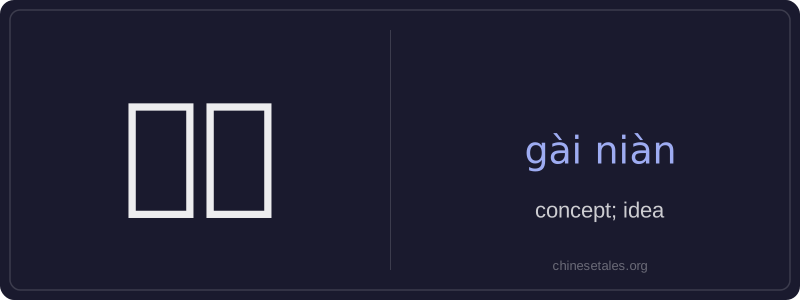
‘概念’ (gài niàn) is a noun meaning ‘concept’ or ‘idea’ — an abstract mental representation of something, often used in academic, philosophical, or everyday explanations. The first character 概 (gài) means ‘general’ or ‘rough outline’, while 念 (niàn) means ‘thought’ or ‘idea’. Together, they convey the sense of a generalized idea — not a specific instance, but a distilled understanding of a category or principle.
This word appears frequently in education, science, and discussions about logic or definitions — for example, explaining what ‘democracy’ or ‘gravity’ means at a foundational level. It’s more formal than words like 想法 (xiǎngfǎ, ‘thought’ or ‘opinion’) and less concrete than 事实 (shìshí, ‘fact’). Learners often confuse it with 理念 (lǐniàn, ‘ideal’ or ‘philosophy’), but 概念 focuses on cognitive categorization rather than values or beliefs. It commonly follows verbs like 理解 (lǐjiě, ‘to understand’), 掌握 (zhǎngwò, ‘to master’), or 形成 (xíngchéng, ‘to form’).
Example Sentences
Related Words
国语
‘Guó yǔ’ literally means 'national language'—
面条
‘面条’ (miàn tiáo) literally means ‘flour str
背后
背后 literally means 'back + behind' and functions
认同
‘认同’ (tóng rèn) is a verb meaning ‘to ident
无论谁
‘无论谁’ (wú lùn shéi) is a pronoun meaning
中学
'Zhōngxué' literally combines 'zhōng' (middle)
见面
见面 literally means 'see face' — combining 见 (t
外语
‘外语’ literally means ‘outside language’ —