Word Explanation
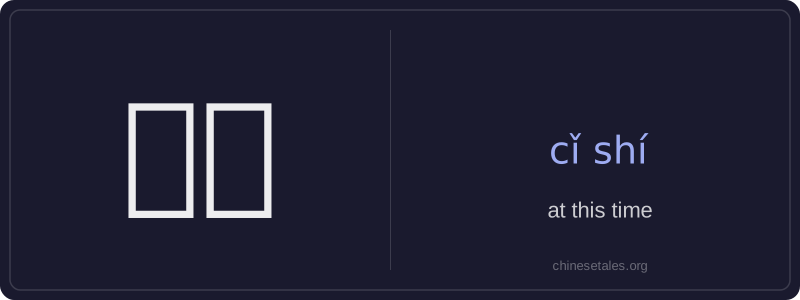
此时 literally means 'this time' — 此 (cǐ) means 'this', and 时 (shí) means 'time' or 'moment'. Together, they function as an adverb meaning 'at this time', 'right now', or 'at this very moment'. It is more formal and literary than the colloquial 现在 (xiàn zài), and often appears in written Chinese, news reports, narratives, or formal speech to mark a precise point in time within a sequence of events.
Unlike 现在, which can refer broadly to the present period, 此时 emphasizes immediacy and situational specificity — it’s frequently used to link actions or states occurring simultaneously with another event described just before or after. It rarely stands alone as a time phrase (e.g., you wouldn’t say '此时是三点' — that would sound unnatural); instead, it typically modifies verbs, appearing mid-sentence to anchor timing contextually.
Example Sentences
Related Words
国语
‘Guó yǔ’ literally means 'national language'—
面条
‘面条’ (miàn tiáo) literally means ‘flour str
背后
背后 literally means 'back + behind' and functions
认同
‘认同’ (tóng rèn) is a verb meaning ‘to ident
无论谁
‘无论谁’ (wú lùn shéi) is a pronoun meaning
中学
'Zhōngxué' literally combines 'zhōng' (middle)
见面
见面 literally means 'see face' — combining 见 (t
外语
‘外语’ literally means ‘outside language’ —