Word Explanation
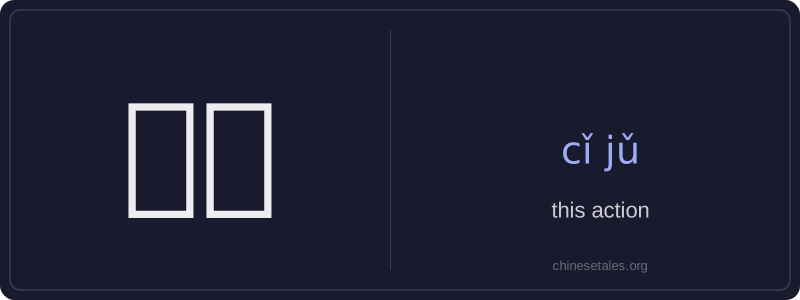
此举 literally means 'this action' or 'this move', combining 此 (cǐ, 'this') and 举 (jǔ, 'action', 'act', or 'move'). It is a formal, written-style noun used to refer back to a previously mentioned or clearly understood action—often one with notable consequence, significance, or intention. Unlike the more neutral 这个动作 (zhè ge dòngzuò), 此举 carries a subtle tone of evaluation, implying the action is noteworthy, deliberate, or even consequential.
It frequently appears in news reports, official statements, academic writing, and formal speeches—never in casual speech or texting. You’ll often see it after describing an action, then using 此举 to summarize or comment on it: e.g., 'The company cut staff; 此举 sparked public concern.' It functions like a cohesive device, helping writers avoid repetition while adding rhetorical weight.
Example Sentences
Related Words
国语
‘Guó yǔ’ literally means 'national language'—
面条
‘面条’ (miàn tiáo) literally means ‘flour str
背后
背后 literally means 'back + behind' and functions
认同
‘认同’ (tóng rèn) is a verb meaning ‘to ident
无论谁
‘无论谁’ (wú lùn shéi) is a pronoun meaning
中学
'Zhōngxué' literally combines 'zhōng' (middle)
见面
见面 literally means 'see face' — combining 见 (t
外语
‘外语’ literally means ‘outside language’ —