Word Explanation
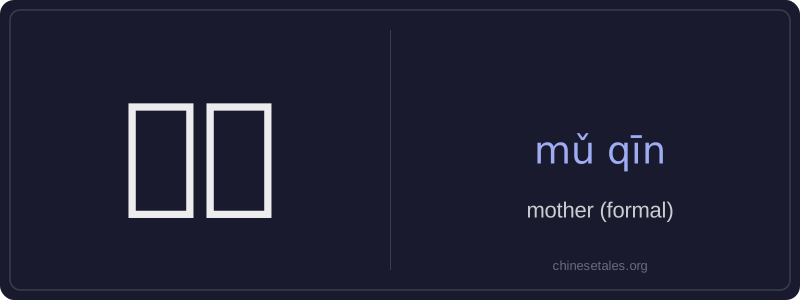
‘母亲’ (mǔ qīn) is the standard, formal term for ‘mother’ in Chinese. It combines two characters: 母 (mǔ), meaning ‘mother’ or ‘female parent’, and 亲 (qīn), meaning ‘relative’ or ‘kin’. Together, they emphasize the familial, blood-tie relationship — literally ‘mother-kin’. Unlike colloquial terms like 妈妈 (mā ma), which is warm and intimate, 母亲 carries a respectful, slightly literary or official tone, often used in writing, speeches, formal addresses, or when expressing deep reverence.
This word appears frequently in contexts such as official documents (e.g., birth certificates), academic discussions about family structure, literature, and respectful public speech. It may also be used in emotional or reflective moments — for instance, when describing maternal sacrifice or cultural values surrounding filial piety. While grammatically interchangeable with 妈妈 in many sentences, choosing 母亲 signals formality, distance, or solemnity rather than everyday familiarity.
Example Sentences
Related Words
国语
‘Guó yǔ’ literally means 'national language'—
面条
‘面条’ (miàn tiáo) literally means ‘flour str
背后
背后 literally means 'back + behind' and functions
认同
‘认同’ (tóng rèn) is a verb meaning ‘to ident
无论谁
‘无论谁’ (wú lùn shéi) is a pronoun meaning
中学
'Zhōngxué' literally combines 'zhōng' (middle)
见面
见面 literally means 'see face' — combining 见 (t
外语
‘外语’ literally means ‘outside language’ —