Word Explanation
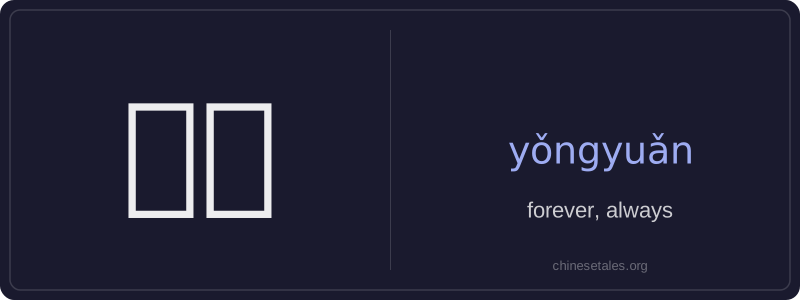
'永远' (yǒngyuǎn) literally combines '永' (yǒng), meaning 'eternal' or 'endless', and '远' (yuǎn), meaning 'distant' or 'far'. Together, they express an unbounded duration—neither beginning nor end—conveying the English concepts of 'forever' or 'always'. It emphasizes permanence and continuity, often used to describe enduring states, feelings, commitments, or natural truths.
This adverb typically modifies verbs, adjectives, or entire clauses and appears in both formal and informal speech. It’s common in declarations of love ('我永远爱你'), promises ('我永远支持你'), philosophical statements ('时间永远向前'), and poetic or emotional contexts. Unlike temporal nouns like '明天' or '去年', '永远' has no measurable unit—it refers to infinite time, making it more abstract and emphatic than words like '总是' (always, as a habitual frequency).
Example Sentences
Related Words
国语
‘Guó yǔ’ literally means 'national language'—
面条
‘面条’ (miàn tiáo) literally means ‘flour str
背后
背后 literally means 'back + behind' and functions
认同
‘认同’ (tóng rèn) is a verb meaning ‘to ident
无论谁
‘无论谁’ (wú lùn shéi) is a pronoun meaning
中学
'Zhōngxué' literally combines 'zhōng' (middle)
见面
见面 literally means 'see face' — combining 见 (t
外语
‘外语’ literally means ‘outside language’ —