Word Explanation
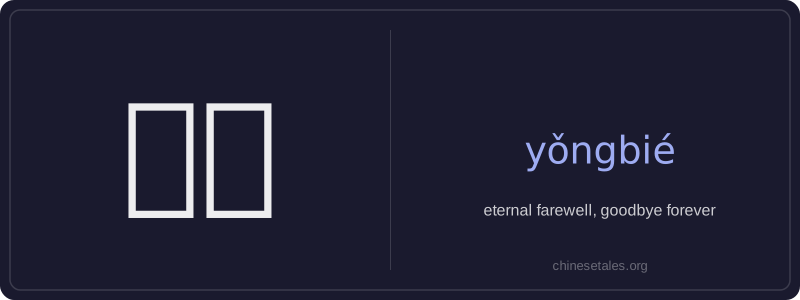
永别 (yǒngbié) literally combines 永 (yǒng), meaning 'eternal' or 'forever', and 别 (bié), meaning 'to part' or 'farewell'. Together, it expresses a final, irreversible separation — most commonly used when someone has died or when parting is understood to be permanent with no hope of reunion. It carries deep emotional weight and solemnity, often appearing in obituaries, eulogies, farewell letters, or heartfelt spoken farewells.
Unlike casual farewells like 再见 (zàijiàn) or even the more formal 告别 (gàobié), 永别 implies irrevocability and profound loss. It is rarely used in everyday conversation unless referring to death or an absolute, life-altering separation. Because of its gravity, it’s typically avoided in lighthearted or uncertain contexts — using it prematurely or flippantly would sound inappropriate or even ominous.
Example Sentences
Related Words
国语
‘Guó yǔ’ literally means 'national language'—
面条
‘面条’ (miàn tiáo) literally means ‘flour str
背后
背后 literally means 'back + behind' and functions
认同
‘认同’ (tóng rèn) is a verb meaning ‘to ident
无论谁
‘无论谁’ (wú lùn shéi) is a pronoun meaning
中学
'Zhōngxué' literally combines 'zhōng' (middle)
见面
见面 literally means 'see face' — combining 见 (t
外语
‘外语’ literally means ‘outside language’ —