Word Explanation
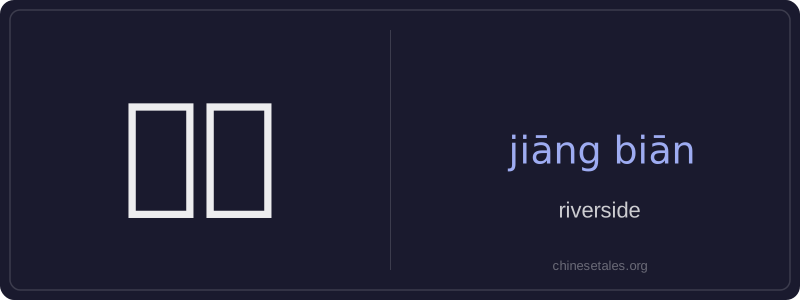
‘Jiāng biān’ literally means ‘river side’ — ‘jiāng’ refers to a large river (especially the Yangtze, but also used generically), and ‘biān’ means ‘side’ or ‘edge’. Together, they form a common noun meaning ‘riverside’, evoking open, scenic, often tranquil outdoor spaces near flowing water. It’s a neutral, descriptive term frequently used in everyday speech, literature, and travel contexts.
The phrase functions as a location noun and typically appears after prepositions like ‘zài’ (at) or ‘dào’ (to), or as the subject/object of a sentence describing activities — walking, resting, fishing, or watching the sunset. Unlike more formal terms like ‘hé àn’ (riverbank), ‘jiāng biān’ carries a gentle, natural, slightly poetic connotation and is rarely used for small streams or artificial canals — it implies a substantial, naturally flowing river.
Example Sentences
Related Words
国语
‘Guó yǔ’ literally means 'national language'—
面条
‘面条’ (miàn tiáo) literally means ‘flour str
背后
背后 literally means 'back + behind' and functions
外语
‘外语’ literally means ‘outside language’ —
认同
‘认同’ (tóng rèn) is a verb meaning ‘to ident
无论谁
‘无论谁’ (wú lùn shéi) is a pronoun meaning
中学
'Zhōngxué' literally combines 'zhōng' (middle)
见面
见面 literally means 'see face' — combining 见 (t