Word Explanation
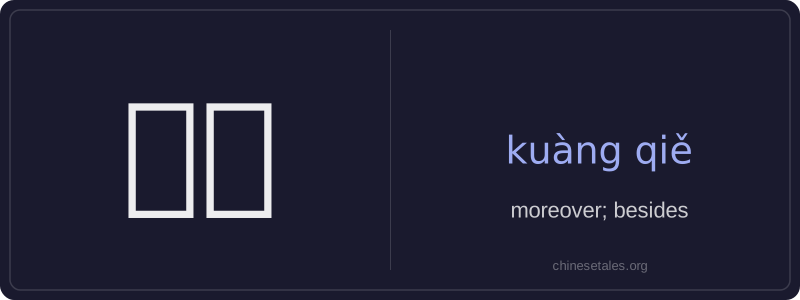
况且 (kuàng qiě) is a conjunction meaning 'moreover' or 'besides', used to introduce an additional reason or fact that strengthens the argument or explanation already given. It functions similarly to English words like 'furthermore' or 'in addition'. The character 况 originally means 'situation' or 'circumstance', and 且 means 'also' or 'yet'; together, they convey the sense of 'given this situation, and also...'. It typically appears at the beginning of a clause or sentence, often after another reason has been stated.
This word is common in spoken and written Chinese—especially in explanations, justifications, or persuasive speech—and carries a neutral-to-formal register. It’s not used for listing items (like 'and') but specifically for adding supportive, reinforcing information. Learners should note that 况且 cannot stand alone as a sentence; it must connect two related ideas, with the second idea providing extra weight or context to the first.
Example Sentences
Related Words
国语
‘Guó yǔ’ literally means 'national language'—
面条
‘面条’ (miàn tiáo) literally means ‘flour str
背后
背后 literally means 'back + behind' and functions
外语
‘外语’ literally means ‘outside language’ —
认同
‘认同’ (tóng rèn) is a verb meaning ‘to ident
无论谁
‘无论谁’ (wú lùn shéi) is a pronoun meaning
中学
'Zhōngxué' literally combines 'zhōng' (middle)
见面
见面 literally means 'see face' — combining 见 (t