Word Explanation
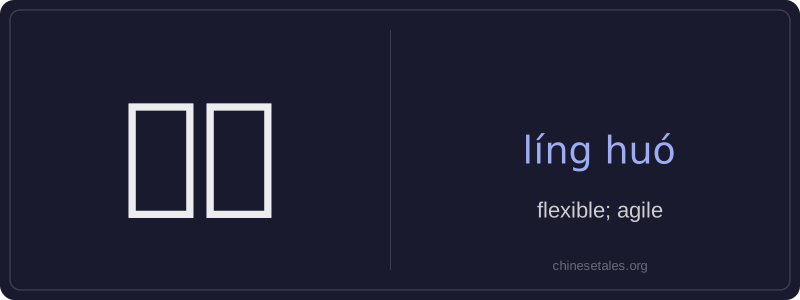
灵活 (líng huó) is an adjective meaning 'flexible' or 'agile'. It combines 灵 (líng), which conveys quickness, alertness, or responsiveness—often associated with spirit or intuition—and 活 (huó), meaning 'alive', 'lively', or 'active'. Together, they describe something or someone that adapts easily, moves or thinks smoothly, and responds well to changing conditions. It’s commonly used to describe people’s thinking, physical movement, work methods, or scheduling.
The word carries a positive, commendatory tone—it suggests competence, resourcefulness, and efficiency. While it can refer to physical agility (e.g., a gymnast’s movements), it’s more frequently applied to mental or procedural flexibility: flexible plans, adaptable strategies, or open-minded approaches. It’s neutral in register—appropriate in both spoken and written Chinese, from casual conversation to formal reports.
Example Sentences
Related Words
国语
‘Guó yǔ’ literally means 'national language'—
面条
‘面条’ (miàn tiáo) literally means ‘flour str
背后
背后 literally means 'back + behind' and functions
外语
‘外语’ literally means ‘outside language’ —
认同
‘认同’ (tóng rèn) is a verb meaning ‘to ident
无论谁
‘无论谁’ (wú lùn shéi) is a pronoun meaning
中学
'Zhōngxué' literally combines 'zhōng' (middle)
见面
见面 literally means 'see face' — combining 见 (t