Word Explanation
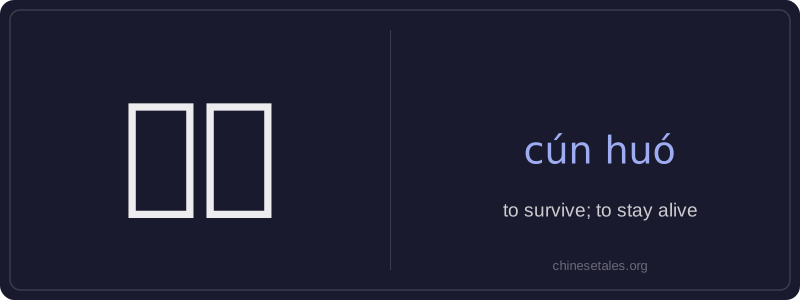
存活 means 'to survive' or 'to stay alive', emphasizing continued existence, especially after danger, illness, hardship, or adverse conditions. The character 存 (cún) means 'to exist' or 'to remain', while 活 (huó) means 'to live' or 'to be alive'; together they form a compound verb stressing sustained life against odds. It is commonly used in medical, ecological, and disaster-related contexts — for example, when discussing patient recovery rates, endangered species survival, or post-disaster population statistics.
This word carries a neutral-to-formal register and is rarely used in casual daily speech about ordinary living (e.g., you wouldn’t say 我今天存活了 to mean 'I made it through today'). Instead, it appears in reports, news, scientific writing, and serious discussions where persistence of life is noteworthy or uncertain. It often co-occurs with measures like rate (存活率), time (存活时间), or conditions (在恶劣环境中存活).
Example Sentences
Related Words
国语
‘Guó yǔ’ literally means 'national language'—
面条
‘面条’ (miàn tiáo) literally means ‘flour str
背后
背后 literally means 'back + behind' and functions
外语
‘外语’ literally means ‘outside language’ —
认同
‘认同’ (tóng rèn) is a verb meaning ‘to ident
无论谁
‘无论谁’ (wú lùn shéi) is a pronoun meaning
中学
'Zhōngxué' literally combines 'zhōng' (middle)
见面
见面 literally means 'see face' — combining 见 (t