Word Explanation
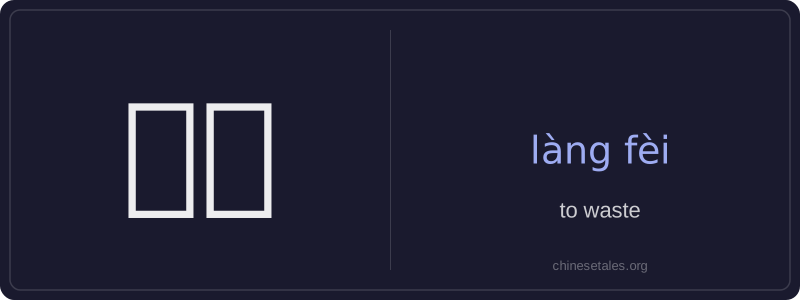
‘Làng fèi’ is a verb meaning 'to waste' — typically referring to the unnecessary or careless use of resources such as time, money, food, energy, or materials. The character ‘浪’ (làng) originally means 'wave' but here carries the sense of 'reckless' or 'uncontrolled'; ‘费’ (fèi) means 'expense' or 'effort'. Together, they evoke the idea of squandering something valuable without purpose or benefit. It’s commonly used in daily life when criticizing inefficiency, overconsumption, or poor planning.
This word often appears with objects like 时间 (shíjiān, 'time'), 食物 (shíwù, 'food'), 水 (shuǐ, 'water'), or 金钱 (jīnqián, 'money'). It frequently occurs in warnings, advice, or moral reflections — for example, parents telling children not to waste food, or environmental campaigns urging people not to waste electricity. While neutral in register, it carries a mild negative connotation and implies disapproval or regret.
Example Sentences
Related Words
国语
‘Guó yǔ’ literally means 'national language'—
面条
‘面条’ (miàn tiáo) literally means ‘flour str
无论谁
‘无论谁’ (wú lùn shéi) is a pronoun meaning
背后
背后 literally means 'back + behind' and functions
外语
‘外语’ literally means ‘outside language’ —
认同
‘认同’ (tóng rèn) is a verb meaning ‘to ident
中学
'Zhōngxué' literally combines 'zhōng' (middle)
见面
见面 literally means 'see face' — combining 见 (t