Word Explanation
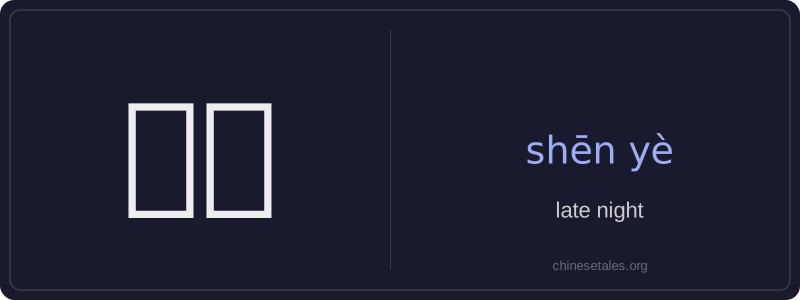
‘深夜’ literally combines ‘深’ (shēn), meaning ‘deep’ or ‘profound’, and ‘夜’ (yè), meaning ‘night’. Together, they form a noun meaning ‘late night’—typically referring to the hours between midnight and dawn, especially when most people are asleep and the city is quiet. It evokes a sense of stillness, solitude, or intensity, often used in literary, descriptive, or reflective contexts.
Unlike more neutral terms like ‘晚上’ (evening) or ‘夜里’ (at night), ‘深夜’ carries a subtle connotation of lateness bordering on the unusual or exceptional—such as working, thinking, or experiencing emotions intensely at that hour. It’s commonly found in narratives, news reports (e.g., ‘深夜突发火灾’), poetry, and everyday speech when emphasizing how late it is. While not formal per se, it’s slightly more refined than colloquial alternatives like ‘大半夜’.
Example Sentences
Related Words
国语
‘Guó yǔ’ literally means 'national language'—
面条
‘面条’ (miàn tiáo) literally means ‘flour str
无论谁
‘无论谁’ (wú lùn shéi) is a pronoun meaning
背后
背后 literally means 'back + behind' and functions
外语
‘外语’ literally means ‘outside language’ —
认同
‘认同’ (tóng rèn) is a verb meaning ‘to ident
中学
'Zhōngxué' literally combines 'zhōng' (middle)
见面
见面 literally means 'see face' — combining 见 (t