Word Explanation
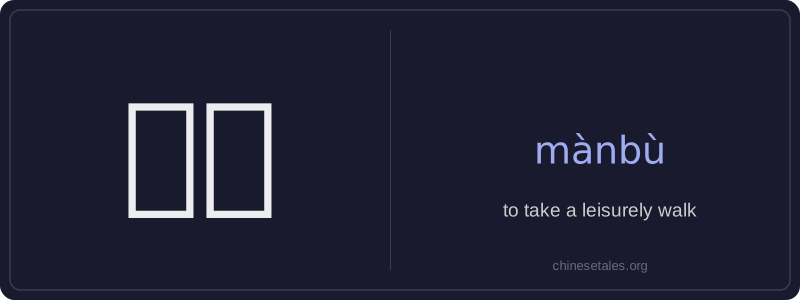
‘漫步’ is a verb meaning ‘to take a leisurely, unhurried walk’, often for pleasure, relaxation, or quiet reflection. The first character 漫 (màn) conveys the idea of ‘unrestrained’, ‘free-flowing’, or ‘without purpose’—like something spreading broadly or happening naturally. The second character 步 (bù) means ‘step’ or ‘to walk’. Together, they form a compound that emphasizes the gentle, unpressured rhythm of walking—not for transport or exercise, but for enjoyment of surroundings, thoughts, or company.
This word is commonly used in descriptive or literary contexts: strolling along riversides, through parks, old streets, or tree-lined avenues. It often appears in travel writing, poetry, and casual conversation when highlighting calm, mindful movement. Unlike the neutral term 散步 (sànbù), which simply means ‘to take a walk’, 漫步 carries a stronger sense of intentionality, grace, and aesthetic awareness—implying presence and appreciation rather than just physical activity.
Example Sentences
Related Words
国语
‘Guó yǔ’ literally means 'national language'—
面条
‘面条’ (miàn tiáo) literally means ‘flour str
无论谁
‘无论谁’ (wú lùn shéi) is a pronoun meaning
背后
背后 literally means 'back + behind' and functions
外语
‘外语’ literally means ‘outside language’ —
认同
‘认同’ (tóng rèn) is a verb meaning ‘to ident
中学
'Zhōngxué' literally combines 'zhōng' (middle)
见面
见面 literally means 'see face' — combining 见 (t