Word Explanation
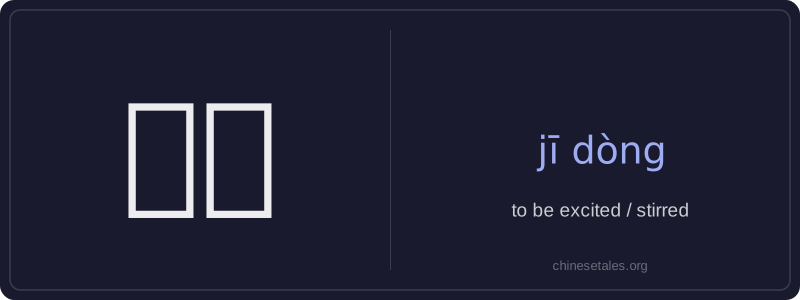
激 (jī) means 'to stir, to excite, or to agitate', while 动 (dòng) means 'to move' — together, 激动 literally conveys the idea of being 'stirred up' or 'emotionally moved'. It describes a strong, often positive emotional state: excitement, exhilaration, or deep emotional arousal — such as when receiving good news, witnessing something inspiring, or reuniting with a loved one. Unlike neutral words like 高兴 (gāoxìng, 'happy'), 激动 carries intensity and physical manifestation — trembling hands, tears, rapid heartbeat — and is commonly used in both spoken and written Chinese.
This word functions flexibly as both an adjective ('I am excited') and a verb ('He got excited'). It’s frequently modified by degree adverbs like 非常 (fēicháng), 十分 (shífēn), or 有点儿 (yǒudiǎnr), and often appears after subject + 是…的 constructions for emphasis. While it usually expresses positive excitement, context can shift its nuance — for example, 激动地喊叫 may imply uncontrolled emotion, not necessarily joy.
Example Sentences
Related Words
国语
‘Guó yǔ’ literally means 'national language'—
面条
‘面条’ (miàn tiáo) literally means ‘flour str
无论谁
‘无论谁’ (wú lùn shéi) is a pronoun meaning
背后
背后 literally means 'back + behind' and functions
外语
‘外语’ literally means ‘outside language’ —
认同
‘认同’ (tóng rèn) is a verb meaning ‘to ident
中学
'Zhōngxué' literally combines 'zhōng' (middle)
见面
见面 literally means 'see face' — combining 见 (t