Word Explanation
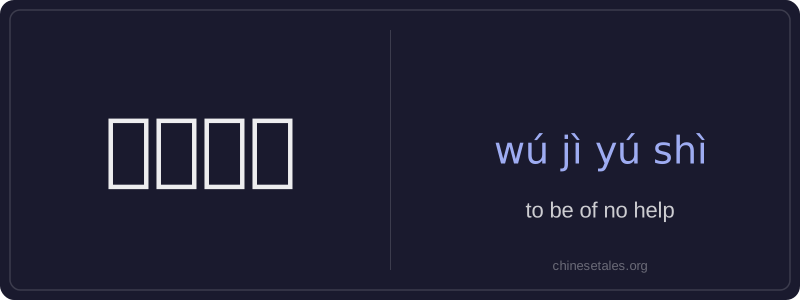
'Wú jì yú shì' literally means 'not beneficial to the matter' — each character contributes: 无 (wú) = 'not', 济 (jì) = 'to help or relieve', 于 (yú) = a preposition meaning 'toward' or 'regarding', and 事 (shì) = 'matter' or 'affair'. Together, the phrase expresses that an action, effort, or measure fails to produce any useful effect — it’s futile, ineffective, or pointless.
This idiom is formal and often used in written Chinese or serious spoken contexts, such as discussing medical treatments, policy responses, or crisis management. It implies a sober assessment of failure despite intention or effort. Unlike colloquial phrases like '没用' (méi yòng), 无济于事 carries a tone of measured disappointment or resignation, not casual dismissal. It typically follows subjects indicating attempts (e.g., efforts, remedies, warnings) and functions predicatively — never as a noun or modifier.
Example Sentences
Related Words
国语
‘Guó yǔ’ literally means 'national language'—
面条
‘面条’ (miàn tiáo) literally means ‘flour str
无论谁
‘无论谁’ (wú lùn shéi) is a pronoun meaning
背后
背后 literally means 'back + behind' and functions
外语
‘外语’ literally means ‘outside language’ —
认同
‘认同’ (tóng rèn) is a verb meaning ‘to ident
中学
'Zhōngxué' literally combines 'zhōng' (middle)
见面
见面 literally means 'see face' — combining 见 (t