Word Explanation
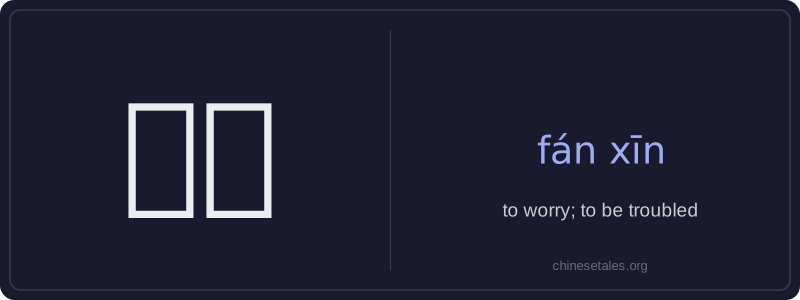
烦心 is a verb meaning 'to worry' or 'to be troubled' — literally 'troublesome heart'. The character 烦 means 'to trouble', 'to annoy', or 'to feel irritated', while 心 means 'heart' or 'mind'. Together, they form an idiomatic compound expressing mental distress caused by persistent, often minor or nagging concerns — not acute anxiety or crisis-level stress, but the kind of low-grade unease that lingers and saps one's peace. It’s commonly used in everyday spoken and written Chinese to describe feelings about unresolved personal matters, small problems, or interpersonal friction.
This word carries a slightly informal, conversational tone and is rarely used in formal documents or news reports. It often appears with subjects like 事 (matter), 问题 (problem), or 情况 (situation), and frequently follows verbs like 觉得 (feel), 让 (make/cause), or 有点 (a little). Unlike the more intense 担心 (to worry about something specific) or 焦虑 (anxiety), 烦心 emphasizes subjective emotional discomfort rather than objective risk or fear.
Example Sentences
Related Words
国语
‘Guó yǔ’ literally means 'national language'—
面条
‘面条’ (miàn tiáo) literally means ‘flour str
无论谁
‘无论谁’ (wú lùn shéi) is a pronoun meaning
背后
背后 literally means 'back + behind' and functions
外语
‘外语’ literally means ‘outside language’ —
认同
‘认同’ (tóng rèn) is a verb meaning ‘to ident
中学
'Zhōngxué' literally combines 'zhōng' (middle)
见面
见面 literally means 'see face' — combining 见 (t